
What is a Membrane Filter Press?
A membrane filter press is an industrial machine used to separate liquids and solids. It operates by pumping a slurry or suspension into chambers lined with filter cloths. Pressure then squeezes the liquid through the cloths while trapping solids, forming a solid filter cake.
What sets membrane filter presses apart from traditional plate and frame presses is that they utilize flexible membrane plates. These membranes can inflate to put additional pressure on the filter cake. This extra squeeze removes more liquid and results in a drier, denser final cake.
Let’s take a closer look at how membrane filter presses work and why they offer key advantages over traditional filter presses in certain applications.

Membrane Filter Press Working Principle
The basic components of a membrane filter press are similar to a conventional press. They include:
- Filter plates
- Filter cloths
- A feed pump
- Piping and valves
- A Frame
The key difference lies in the filter plates.
While traditional presses use solid plates, membrane filter presses have chambers with one flexible side made of an elastic material like rubber, polypropylene or polyurethane.

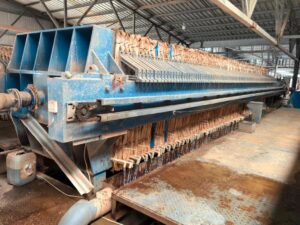
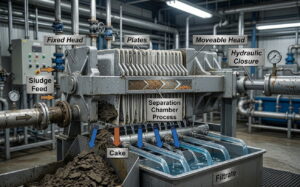
Here is a diagram of a membrane filter press showing the key components.
When slurry enters the chambers, the initial filtration phase is the same as a standard press. Pressure from the feed pump forces liquid through the filter cloths, leaving solids behind.
Once filling is complete, the membrane inflation phase begins. A separate water or air supply inflates the rubber membranes inside the plates.
The expanding membranes compress the filter cake, squeezing out more liquid. This additional compression can remove a substantial amount of moisture, increasing final cake dryness.
Membrane Pressing Modes
There are two main modes membrane plates can operate in:
- Batch mode – membranes inflate once at the end of the filtration cycle. This single squeezing extracts extra liquid.
- Continuous mode – membranes repeatedly inflate and deflate during the filtration process. Pulsing the membranes helps extract liquid evenly for optimal moisture reduction.
Engineering the membrane filter press for the specifics of an application is important. Factors like required dryness, cycle times, and properties of the slurry all impact performance.
Benefits and Advantages of Membrane Filter Presses
There are several key reasons why plants choose membrane filter press systems:
1. Increased Dryness
By squeezing with inflated membranes, membrane presses can increase cake dryness substantially compared to traditional plate and frame presses:
- Plate and frame presses typically achieve 30-40% solids
- Membrane presses often reach 50-70% solids through membrane squeezing.
A drier filter cake has major benefits. It reduces disposal costs of liquid waste. And it improves properties of the cake for further processing or handling.
2. Shorter Cycle Times
The membrane squeezing phase also compacts filter cakes to a smaller thickness compared to traditional presses.
This allows membrane presses to run shorter cycles. They can filter more volume of slurry through the machine in a given time frame.
In many cases, membrane presses cut cycle durations ~50% compared to plate and frame units. Some applications see reductions between 50-75%. This boosts plant throughput and productivity.
3. Lower Operating Costs
The combination of faster cycles and drier filter cakes also lowers operating costs in two ways:
- Consumables last longer – Shorter run times mean filter cloths require less frequent replacement.
- Reduced secondary drying – A drier cake from the press means less energy required for additional thermal or mechanical drying.
4. Handles Difficult Applications
Membrane presses excel in filtering tricky suspensions conventional presses struggle with:
- Low solids slurries – High moisture dilute slurries can achieve good dryness.
- Sticky, oozy cakes – Gentle and even membrane compression prevents cracks that allow liquid escape.
- Compressible cakes – Even highly compressible cakes compact well through membrane action instead of through feed pressure.
5. Sanitary Design
Pharmaceutical and food applications require equipment designed to high cleanliness standards. Membrane presses offer fully drainable, clean-in-place designs to maintain strict hygiene.
Examples of Membrane Filter Press Applications
Membrane filter press systems provide an efficient solid-liquid separation solution across many industries, including:
Mining Operations – Dewater tailings and recover precious metals.
Industrial Wastewater – Reduce volume of liquid waste requiring further treatment.
Food Production – Extract and recover valuable concentrates from waste streams.
Chemical Processing – Purify chemical compounds and recycle water.
Pharmaceuticals – Filter high value drug precursors and maintain sterility.
Key Considerations When Specifying
As with any separation equipment, understanding application requirements is crucial for getting the best results from a membrane filter press.
Properties of Slurry – Components, solids concentration, viscosity, etc. dictate design specifics.
Target Throughput – Required filtration rate helps size components like pump capacity.
Solids Loading – Impacts cycle lengths as more solids take longer to compress into a set chamber volume.
Final Dryness Target – Higher dryness may require larger membrane size and compression ratio.
Fully Automated – Modern membrane filter press PLC control systems enable recipe storage for consistent, automated operation.
Conclusion
Membrane filter presses utilize inflatable membrane plates to put additional compression force onto filter cakes. This added squeeze extracts substantially more liquid to achieve much higher cake dryness compared to conventional plate and frame filter presses.
Plus, membrane presses filter faster and reduce operating costs through higher throughput and longer consumables lifetime. Their flexibility makes them ideal for difficult separations in mining, chemical production, food processing, pharmaceutical purification and industrial wastewater management.
With proper design tailored to specific process conditions, membrane filter presses provide superior solid-liquid separation across an array of industrial applications. Their advancement makes them a go-to choice when high performance is essential.



 English
  German
  Spanish
  French
  Italian
  Russian
  Turkish
  Dutch
Dutch  Polish