
So you’re wondering: what is ceramic membrane?
Here’s the deal:
Ceramic membranes are taking the water treatment world by storm. And for good reason.
They’re tough. They last forever. And they can handle conditions that would destroy regular filters.
But here’s the thing:
Most people have no clue how these high-tech filters actually work.
That’s why I put together this complete guide.
In this post, as a professional ceramic flat membrane manufacturer, I will share:
- Exactly what ceramic membranes are (and why they matter)
- How they stack up against traditional filters
- Real-world applications that’ll blow your mind
- Plus, whether they’re worth the investment for YOUR specific needs
Let’s dive in.
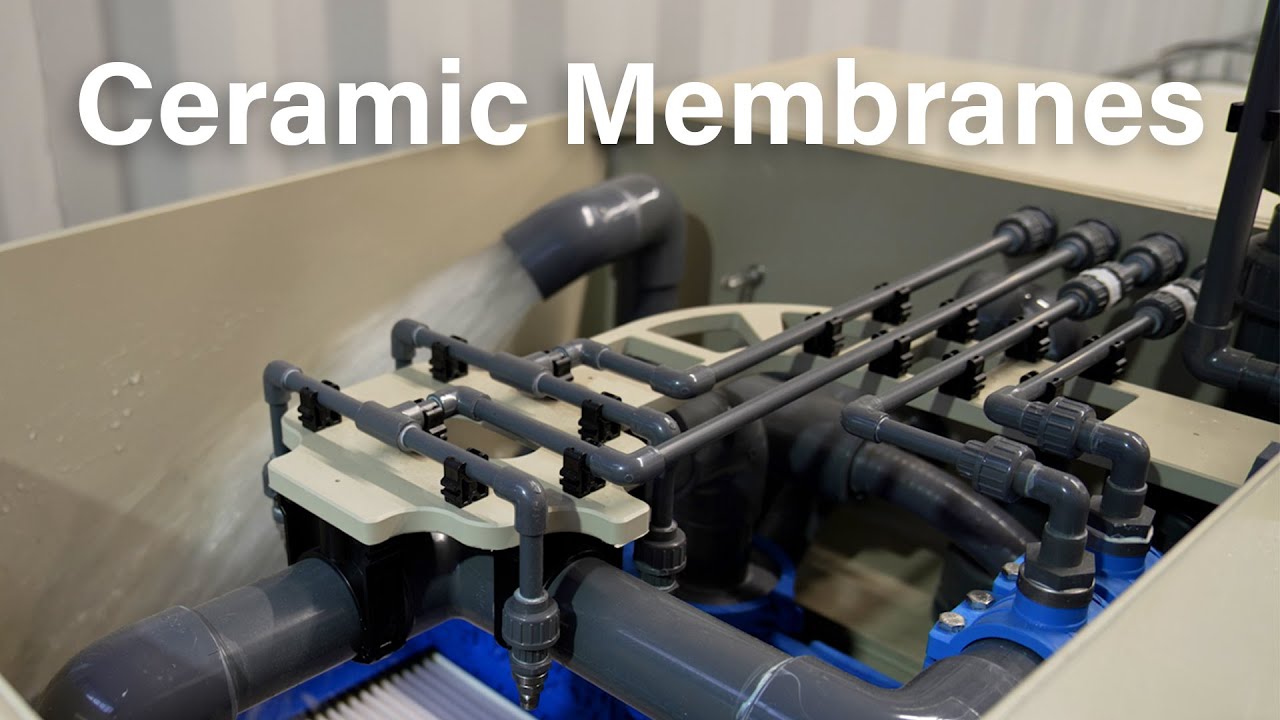
What Is Ceramic Membrane?
A ceramic membrane is a type of artificial filter made from inorganic materials like alumina, titania, zirconia, or silicon carbide. Ceramic membranes are very different from polymeric membranes. Polymeric membranes are a more common type of filter.
Ceramic membranes can last a long time and can handle very difficult conditions. They’re used in many different filtration processes, especially in industries that deal with strong chemicals or high temperatures.
Think of ceramic membranes as super-advanced filters made from inorganic materials.
Unlike your typical plastic filters (polymeric membranes), these bad boys are made from materials like:
- Silicon carbide
- Alumina
- Titania
- Zirconia
But here’s what makes them special:
They’re basically indestructible.
I’m talking about filters that can withstand:
- Extreme temperatures (up to 800°C)
- Harsh chemicals (pH 0-14)
- Massive pressure
- Abrasive materials
And the best part?
They can last 20+ years. No joke.
How Do Ceramic Membranes Actually Work?
Here’s where it gets interesting.
Ceramic membranes work using a simple principle: size exclusion.
Picture this:
You’ve got dirty water flowing through tiny pores in the ceramic material. The clean water (permeate) passes through. Everything else (concentrate) gets rejected.
Simple, right?
But there’s more to it.
These membranes use different filtration methods:
Microfiltration (MF)
- Pore size: 0.1 to 10 micrometers
- Removes: Bacteria, suspended solids, oil droplets
Ultrafiltration (UF)
- Pore size: 0.01 to 0.1 micrometers
- Removes: Viruses, proteins, colloids
Nanofiltration (NF)
- Pore size: Less than 0.01 micrometers
- Removes: Some salts, heavy metals
The actual filtration process works like this:
- Feed water enters under pressure
- Clean water passes through the membrane pores
- Contaminants get concentrated on the feed side
- You collect clean water (permeate) on one side
- Concentrated waste (retentate) exits the other side
Pretty straightforward.
The Materials That Make Ceramic Membranes Special
Not all ceramic membranes are created equal.
The material you choose makes a HUGE difference.
Here are the heavy hitters:
Silicon Carbide (SiC)
This is the rockstar of ceramic membrane materials.
Why?
It’s the second hardest material on Earth (diamonds are #1).
Silicon carbide membranes offer:
- Extreme chemical resistance
- High flux rates
- Thermal stability
- Long lifespan
Alumina (Al2O3)
The workhorse of the ceramic membrane world.
Alumina membranes are:
- Cost-effective
- Good chemical resistance
- Decent thermal properties
- Widely available
Titania and Zirconia
These are the specialty players.
They’re used when you need:
- Specific chemical compatibility
- Enhanced catalytic properties
- Special separation characteristics
Real-World Applications That’ll Surprise You
Here’s where ceramic membranes really shine.
They’re not just for water treatment (although that’s huge).
Check out these applications:
Industrial Wastewater Treatment
Companies use ceramic membranes to treat:
- Oil and gas produced water
- Heavy metal contamination
- Chemical plant effluents
- Mining wastewater
Food and Beverage
This is massive.
Ceramic membranes help with:
- Milk pasteurization (Extended Shelf Life milk)
- Beer clarification
- Juice concentration
- Whey protein separation
One dairy plant I know switched to ceramic membranes in 2023. Their maintenance costs dropped 70%.
Drinking Water Treatment
Over 130 facilities in Japan use ceramic membranes for drinking water.
In the US?
We’re catching up. There’s a 46 MGD plant that’s been crushing it since 2014.
Chemical Processing
These membranes handle:
- Catalyst recovery
- Solvent purification
- Acid clarification
- Oil/water separation
The Good, The Bad, and The Reality
Let me give it to you straight.
Ceramic membranes aren’t perfect for everyone.
The Advantages
Durability That’s Off the Charts
I’ve seen ceramic membranes last 20+ years. Try getting that from a polymeric membrane.
Chemical Resistance
pH 0-14? No problem. These membranes laugh at acids and bases.
Temperature Tolerance
Run them hot. Run them cold. They don’t care.
Easy Cleaning
You can blast these things with aggressive chemicals. They can take it.
No Wet Storage
Unlike polymeric membranes, you can let them dry out completely. They’ll work fine when you restart.
The Disadvantages
Higher Initial Cost
Let’s be real. Ceramic membranes cost more upfront. Sometimes 2-3x more than polymeric options.
Brittleness
Drop one? It might shatter. Thermal shock can crack them too.
Limited Suppliers
Not as many options as polymeric membranes. Yet.
Ceramic vs. Polymeric: The Ultimate Showdown
Everyone wants to know:
“Should I go ceramic or stick with polymeric?”
Here’s my take:
Choose Ceramic When:
- You need 10+ year lifespan
- Dealing with harsh chemicals
- High temperature applications
- Minimal downtime is critical
- Total lifecycle cost matters more than upfront cost
Stick with Polymeric When:
- Budget is super tight
- Application is gentle
- Short-term solution is fine
- You need maximum supplier options
The Technical Stuff (For the Nerds)
Let’s get into the nitty-gritty.
Membrane Structure
Ceramic membranes typically have:
- Support layer (provides strength)
- Active layer (does the filtering)
- Sometimes multiple intermediate layers
Configuration Options
You’ve got choices:
- Tubular (most common)
- Flat sheet
- Hollow fiber
- Monolithic multi-channel
Cleaning Methods
Three main approaches:
- Crossflow – Continuous cleaning during operation
- Backwash – Reverse flow to remove fouling
- Chemical Cleaning-in-Place (CIP) – Aggressive chemical cleaning
Making the Investment Decision
Here’s the bottom line:
Ceramic membranes are an investment.
But they’re often worth it.
Consider this:
A municipal water plant switched to ceramic membranes in 2020. Their findings?
- 60% reduction in chemical usage
- 40% less downtime
- 90% reduction in membrane replacement costs
- ROI in 4 years
Not bad.
Future Trends for 2025 and Beyond
The ceramic membrane market is exploding.
Here’s what’s coming:
Cost Reductions
Manufacturing improvements are driving costs down. We’re seeing 20-30% price drops on some products.
New Materials
Researchers are developing next-gen ceramics with:
- Higher flux rates
- Better selectivity
- Lower costs
Expanded Applications
Ceramic membranes are moving into:
- Direct potable reuse
- Pharmaceutical manufacturing
- Lithium extraction
- Carbon capture
Your Next Steps
So, what is ceramic membrane technology really about?
It’s about getting filtration performance that lasts decades, not years.
It’s about handling conditions that would destroy conventional filters.
And it’s about long-term value over short-term savings.
If you’re dealing with:
- Challenging water conditions
- High-value applications
- Long-term projects
Then ceramic membranes deserve serious consideration.
They’re not the cheapest option upfront.
But they might be the smartest investment you make in 2025.
The technology is proven. The economics are improving. And the applications keep expanding.
Bottom line?
Ceramic membranes are transforming how we think about filtration. And if you’re serious about performance and longevity, they should be on your radar.
Now you know exactly what is ceramic membrane technology and whether it’s right for your needs.




 English
  German
  Spanish
  French
  Italian
  Russian
  Turkish
  Dutch
Dutch  Polish