
Flat sheet membrane vs hollow fiber membrane selection can make or break your water treatment project.
I’ve seen facilities waste millions on the wrong membrane type. And honestly? It’s completely avoidable.
Here’s the deal:
Both membrane types work great. But they excel in completely different situations. Choose wrong, and you’re looking at maintenance nightmares, efficiency issues, and budget overruns.
So today as a professional water treatment supplier, I’m going to break down everything you need to know about these two membrane configurations. By the end, you’ll know exactly which one fits your specific needs.
Let’s dive in.

Definition of Flat Sheet Membrane and Hollow Fiber Membrane
What Are Flat Sheet Membranes?
Flat sheet membranes are exactly what they sound like.
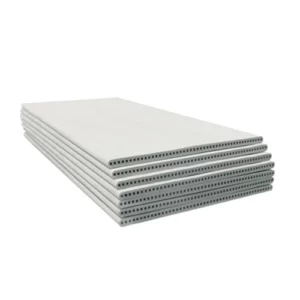
They’re planar, two-dimensional membranes arranged in cassettes or frames. Think of them like sheets of specialized filter paper stacked together.
The feed water flows across the flat surface. Clean water passes through. Contaminants stay behind.
Simple, right?
But here’s where it gets interesting:
These membranes typically use PVDF (polyvinylidene fluoride) material. Why PVDF? Because it handles oxidation like a champ. And in wastewater treatment, oxidation resistance isn’t optional.
The membranes sit in modules with ABS panel support. This gives them serious mechanical strength. We’re talking about membranes that can handle physical stress without breaking a sweat.
What Are Hollow Fiber Membranes?
Now hollow fiber membranes? Totally different beast.
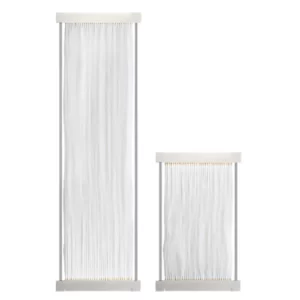
Picture thousands of tiny straws bundled together. Each “straw” is actually a porous membrane fiber with a hollow center.
Water can flow two ways:
- Inside-out (through the fiber’s center)
- Outside-in (around the fiber’s exterior)
These fibers pack an insane amount of surface area into a tiny space. One module can contain thousands of membrane fibers, each doing its filtration thing.
And yes, they also use PVDF material. The oxidation resistance is just as critical here.
Flat Sheet Membrane vs Hollow Fiber Membrane
The Real Differences That Matter
Surface area is where hollow fibers absolutely dominate.
A hollow fiber module packs 5-10 times more membrane surface area than a flat sheet system of the same size. That’s not a typo. We’re talking about massive efficiency differences.
But wait. There’s more to this story.
Cleaning and Maintenance: The Hidden Cost
Flat sheet membranes are maintenance champions.
Why? Because you can actually see and access the membrane surface. Low-pressure water cleaning works great. Chemical cleaning is straightforward. And if one membrane sheet fails? Just replace that single sheet.
Hollow fibers? Not so simple.
Sure, they can backwash (reverse the flow to clean). That’s a huge advantage. But when fouling gets serious inside those tiny fiber lumens, cleaning becomes a real challenge.
And here’s the kicker:
If hollow fibers break, you can’t just replace one fiber. The whole module might need replacement.
The Fouling Factor
Fouling is membrane enemy number one.
Flat sheets handle it better. Their design allows for aggressive air scouring that blasts debris off the surface. Dead zones are minimal. Fouling accumulates slower.
Research shows flat sheet membranes can run 30-50% longer between cleanings compared to hollow fibers in similar conditions.
But hollow fibers have a trick up their sleeve:
Self-cleaning action. The fibers move and vibrate during operation, naturally dislodging some foulants. It’s not perfect, but it helps.
Energy Consumption Truth
Here’s something vendors don’t always tell you:
Flat sheets typically need more aeration energy. We’re talking air-to-water ratios of 30:1 or higher. That’s a lot of air pumping.
Hollow fibers? They use pulse aeration with ratios around 3:1 to 5:1.
Do the math. That’s 6-10 times less air required.
Over a system’s lifetime, those energy savings add up fast.
Pretreatment Requirements: The Devil in the Details
This is where things get really interesting.
Hollow fiber membranes are divas about pretreatment. They need fine screening (usually under 1mm) to prevent fiber damage. Hair and fibrous materials? Absolute killers for hollow fiber systems.
I’ve seen entire hollow fiber installations fail because of inadequate hair removal. The fibers get tangled, flow patterns change, and efficiency plummets.
Flat sheets? Much more forgiving.
Their robust structure handles debris better. Sure, you still need screening. But 3mm screening usually does the job. No special hair filters required.
Installation Footprint: Space Matters
Hollow fibers win the space game hands down.
A hollow fiber MBR system typically needs 60-80% less membrane tank volume than flat sheets for the same capacity. In urban areas where land costs are astronomical, this matters.
But there’s a catch:
Flat sheet systems can handle sludge concentrations up to 15-20 g/L. Hollow fibers max out around 6-10 g/L. Higher sludge concentration means smaller bioreactor volumes.
So while hollow fibers save space in the membrane tank, flat sheets can reduce overall system footprint through smaller bioreactors.
The Million Dollar Question: Which Should You Choose?
After analyzing hundreds of installations, here’s my take:
Choose Flat Sheet Membranes When:
You’re dealing with challenging wastewater. High suspended solids, variable quality, lots of fibrous material? Flat sheets handle it better.
Maintenance accessibility matters. Small facilities with limited technical staff do better with flat sheets. They’re just easier to maintain.
You have space. If footprint isn’t your primary constraint, flat sheets offer operational advantages.
Reliability trumps efficiency. Flat sheets are workhorses. They might not be the most efficient, but they keep running.
Choose Hollow Fiber Membranes When:
Space is at a premium. Urban installations, retrofits, and space-constrained sites benefit from hollow fiber’s compact design.
You have consistent, well-pretreated feed water. Hollow fibers shine with good pretreatment.
Energy costs dominate your operating budget. Those lower aeration requirements translate to real savings.
You need maximum capacity. For large municipal installations processing millions of gallons daily, hollow fiber efficiency is hard to beat.
Real World Performance Data
Let me share some numbers from actual installations:
A 5 MGD municipal plant switched from flat sheet to hollow fiber membranes in 2023. Results?
- 40% reduction in footprint
- 35% lower energy consumption
- 25% increase in maintenance frequency
Another facility (industrial wastewater, highly variable quality) went the opposite direction. They replaced hollow fibers with flat sheets and saw:
- 50% reduction in maintenance downtime
- 30% longer run times between cleanings
- 15% increase in energy use (acceptable trade-off for them)
The lesson? Context is everything.
Future Trends: What’s Coming
The membrane industry isn’t standing still.
New PVDF formulations are making both membrane types more robust. We’re seeing hollow fibers with reinforced structures that resist breakage better. Flat sheets are getting thinner and more permeable without sacrificing strength.
Hybrid systems are emerging too. Some facilities use hollow fibers for primary treatment and flat sheets for polishing. Best of both worlds approach.
AI-powered monitoring is changing the game. Systems can now predict fouling before it happens, optimizing cleaning cycles for both membrane types.
Making Your Decision
Here’s my framework for choosing:
First, analyze your water:
- Suspended solids levels
- Presence of hair/fibers
- Oil and grease content
- Temperature variations
Second, evaluate your constraints:
- Available space
- Energy costs
- Maintenance capabilities
- Capital budget
Third, consider your priorities:
- Reliability vs efficiency
- Operating cost vs capital cost
- Simplicity vs performance
Then match these factors to membrane characteristics.
The Bottom Line
There’s no universal winner in the flat sheet membrane vs hollow fiber membrane debate.
Flat sheets offer reliability, easy maintenance, and robust operation. They’re the dependable workhorse of membrane systems.
Hollow fibers deliver efficiency, compactness, and lower energy use. They’re the high-performance option when conditions are right.
Success comes from matching membrane type to your specific situation. Don’t let vendors push you toward their preferred technology. Analyze your needs, understand the trade-offs, and make an informed choice.
The right membrane makes operations smooth and efficient. The wrong one creates headaches for years.
Choose wisely.
And remember: membrane technology keeps evolving. What’s true in 2025 might change by 2027. Stay informed, monitor performance, and be ready to adapt.
Because at the end of the day, the best membrane system is the one that reliably meets your treatment goals at the lowest total cost.
That’s what really matters.
So whether you go with flat sheet membrane vs hollow fiber membrane technology, make sure it aligns with your specific needs, constraints, and objectives.



 English
  German
  Spanish
  French
  Italian
  Russian
  Turkish
  Dutch
Dutch  Polish