
A membrane filter press is an advanced type of filter press used for sludge dewatering and clarifying applications across various industries. Unlike regular filter presses that rely solely on pressure, membrane filter presses take things a step further and literally “squeeze” more liquid out of the filtered cake through a membrane inflation process.
In this post, as a professional membrane filter press manufacturer, I’ll walk you through the step-by-step operating process of an automatic membrane filter press. You’ll learn how the membrane system works, when the membranes are inflated during an operating cycle, and why membrane presses can significantly boost capacity and reduce cycle times.

What is a Membrane Filter Press?
Let’s start with the basics.
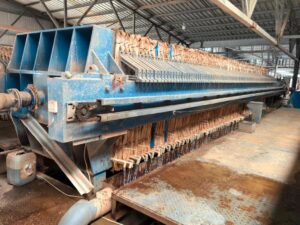
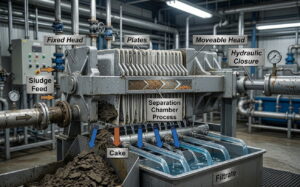
A membrane filter press looks identical to a conventional recessed plate filter press from the outside. The key difference lies in the internal design of the filter chambers.
Each chamber is created by a pair of plates, with one side being a conventional recessed plate and the other side fitted with either an integrated polypropylene diaphragm or interchangeable rubber membrane.
These flexible membrane surfaces can be inflated, allowing them to press against the recessed plate with force. This squeezes the pre-formed filter cake and forces out residual moisture through a mechanical compression effect.
The end result? You get drier filter cakes while maintaining throughput capacity or reducing cycle times.
How Does a Membrane Filter Press Work?
Now let’s walk through the operating process of a membrane filter press cycle from start to finish:
1. Filling
The process begins like a conventional filter press, with slurry pumped in through the feed pipe. The slurry fills each chamber and initial filtration occurs under pressure as the solids accumulate on the filter cloths to form individual filter cakes.
The rubber membranes remain relaxed during the filling phase and allow unimpeded cake build up.
2. Pre-Squeeze Filtration
When the chambers are close to being 80-90% full, the feed pump pressure will rise sharply. At this point, the pump flow rate is slowed down to allow filtration to continue at a lower pressure for another 10-15 minutes.
The purpose here is to allow the formed cakes to slightly compact and consolidate, making them easier to squeeze in the next phase.
3. Cake Squeeze
Now the magic happens!
The feed pump is switched off and the membrane squeeze sequence activated. Compressed air or high pressure water (up to 15 bar) fills the cavity behind each membrane, inflating them and providing even pressure across the entire surface of the filter cake.
The pressure squeezes the cakes, displacing the liquid held within the cake pores and significantly reducing moisture content. Depending on the sludge properties, this squeezing action can sometimes remove as much liquid as the initial pressure filtration!
Squeezing time can range from 15 minutes up to an hour for certain applications. Real-time monitoring of filtrate flows and clarity helps determine optimal durations.
4. Cake Discharge
After squeezing is complete, the water or air pressure is fully released from the membranes before opening up the filter press. The cakes can now be discharged as per a conventional filter press using plate shifters or manual methods.
An advantage here is that membrane cakes discharge easily without air knives or plate shakers since they form stiff, cohesive blocks after squeezing.
Why Use a Membrane Filter Press?
Now that you understand the internal workings of a membrane filter press system, you may be wondering about the real-world advantages.
Here are some of the benefits that a membrane squeeze filter press offers over conventional recessed chamber filter presses:
Higher cake dry solids – Membrane squeezing physically removes moisture that’s mechanically bound within the finished cakes. This allows discharged cakes with up to 5-8% higher solids content compared to regular presses.
Faster cycle throughput – The additional liquid removal achieved via membrane squeezing significantly cuts overall cycle times. In some cases, membrane presses can double effective throughput capacity over fixed volume conventional presses.
Lower chamber count – For a target cake production rate, a membrane press would require far fewer filter chambers compared to standard filter presses thanks to faster cycles. This directly saves costs on filter cloths and ancillary equipment.
Space savings – With higher throughputs from smaller filter sizes, membrane presses take up less floor space. This advantage applies for both new and retrofit installations with limited space availability.
Cake release ease – Squeezed filter cakes have stiffer, more cohesive structures that release easily from chamber walls and cloths without air blasting or plate shaking. This reduces maintenance while protecting delicate filter cloths.
Key Considerations for Membrane Presses
While membrane filter presses clearly have some standout benefits, they aren’t necessarily suitable for every dewatering application.
Here are two key limitations to bear in mind:
Higher capital costs – Both integrated membrane plates and plate + diaphragm designs have significantly higher upfront costs over conventional plates. The added cost of ancillary equipment for membrane inflation must also be factored in. These costs may inhibit feasibility for smaller filter sizes.
Not universally effective – The core value proposition relies on mechanical liquid removal through applied pressure. However, membrane squeezing is ineffective on certain incompressible materials like metal hydroxides. Thorough testing is recommended before adoption.
The Bottom Line
Membrane filter press systems provide unmatched dewatering performance and rapid cycling in the right applications where membrane compatibility testing confirms suitability. Reap the benefits through proper sludge characterization and pilot testing prior to investing in full-scale membrane filter presses.
I hope this detailed overview has helped demystify exactly how membrane filter presses achieve such incredible results over conventional dewatering filters. Let me know if you have any other questions in the comments!



 English
  German
  Spanish
  French
  Italian
  Russian
  Turkish
  Dutch
Dutch  Polish