
If you’ve been looking into water filtration solutions, you’ve probably come across ceramic filter membranes.
But what is ceramic filter membrane exactly?
Here’s the deal:
What is Ceramic Filter Membrane
A ceramic filter membrane is a type of filter made from inorganic materials like alumina, silicon carbide, or zirconia. These filters separate and purify liquids through tiny pores that trap contaminants while letting clean water pass through.
Pretty simple, right?
Well, there’s actually a lot more to it.
In this guide, as a professional ceramic flat sheet membrane manufacturer, I’ll show you everything you need to know about ceramic membrane filtration. Including how it works, the pros and cons, and whether it’s right for your specific needs.
Let’s dive in.
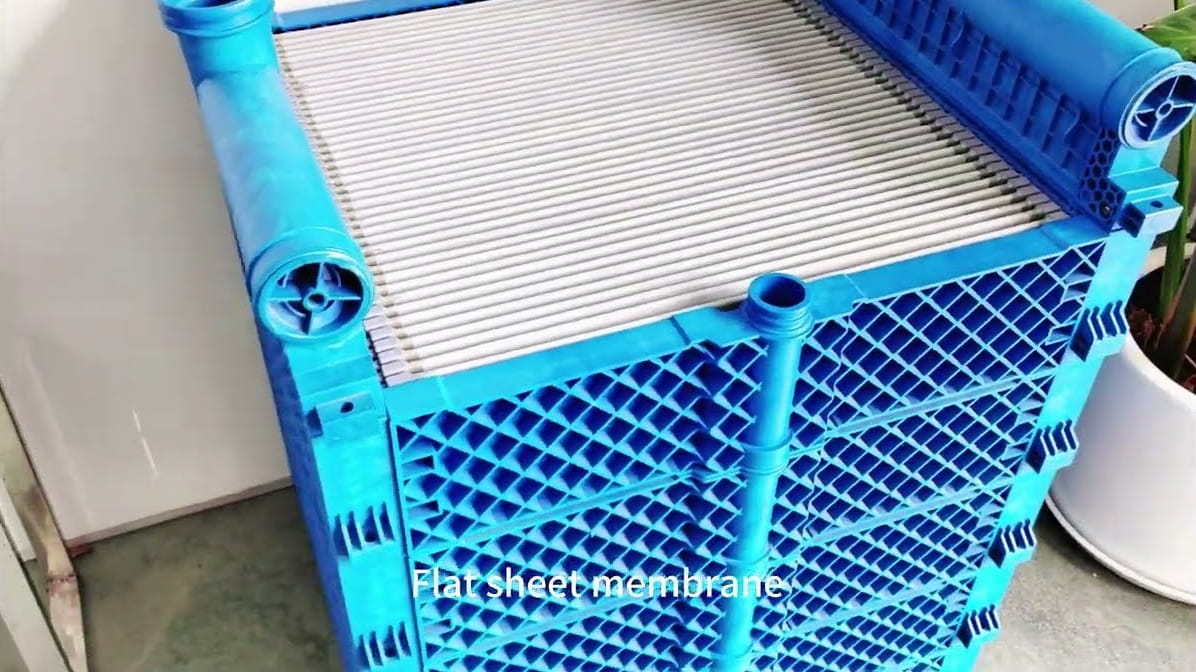
How Ceramic Membrane Filtration Works
Here’s something interesting:
Ceramic membranes work completely differently than your typical water filter.
Instead of absorption (like activated carbon), they use physical separation.
The process is actually pretty straightforward:
- Water gets pushed through the membrane under pressure
- The membrane has millions of tiny pores (we’re talking 0.01 to 0.1 microns)
- Particles larger than the pores get trapped
- Clean water passes through
But here’s where it gets interesting.
There are two main ways ceramic membranes filter water:
Cross-flow filtration: Water flows parallel to the membrane surface. This creates a sweeping action that prevents clogging. It’s like having a self-cleaning filter.
Dead-end filtration: Water flows directly through the membrane. Simple but prone to fouling.
Most industrial systems use cross-flow. And for good reason – it can run for months without cleaning.
Types of Ceramic Filter Membrane Materials
Not all ceramic membranes are created equal.
The material makes a HUGE difference in performance.
Here are the main types you’ll encounter:
Alumina (Aluminum Oxide)
The most common type. Why? It’s cost-effective and handles most applications well. Perfect for general water treatment.
Silicon Carbide
This is the heavy-duty option. Extremely durable and handles aggressive chemicals like a champ. I’ve seen these last 15+ years in industrial settings.
Zirconia
The premium choice. Superior mechanical strength and chemical resistance. But you’ll pay for it.
Titania (Titanium Dioxide)
Great for specific applications like oil-water separation. Not as common but highly effective when you need it.
Advantages That Make Ceramic Membranes Stand Out
Let me be clear:
Ceramic membranes aren’t always the best choice.
But when they are, they’re REALLY the best choice.
Here’s why:
Extreme Durability
These things are tough. We’re talking about filters that can handle:
- Temperatures up to 350°C
- pH levels from 0 to 14
- Aggressive cleaning chemicals
- High pressure operations
I’ve seen polymeric membranes melt in conditions where ceramic membranes don’t even flinch.
Long Lifespan
While polymer membranes last 3-5 years, ceramic membranes can run for 15+ years.
Do the math on that ROI.
Superior Filtration Performance
The uniform pore structure means consistent filtration. No channeling. No breakthrough. Just reliable performance.
Chemical Resistance
You can clean these with acids, bases, chlorine – whatever it takes. Try that with a polymer membrane and watch it dissolve.
The Downsides (Because Nothing’s Perfect)
Now for the not-so-great parts:
High Initial Cost
Let’s not sugarcoat it: ceramic membranes are expensive.
We’re talking 3-5x the cost of polymer membranes upfront.
Brittleness
Drop a ceramic membrane and it shatters. They need careful handling during installation and maintenance.
Lower Flux Rates
Compared to some polymer membranes, ceramics have lower flow rates. You might need more membrane area for the same throughput.
Real-World Applications
Here’s where ceramic membranes really shine:
Industrial Wastewater Treatment
I’ve seen ceramic membrane systems handle:
- Oil and gas produced water
- Metal finishing wastewater
- Food processing effluent
- Pharmaceutical waste streams
The results? Consistent performance where polymer membranes fail within weeks.
Drinking Water Production
More municipalities are switching to ceramic membranes. Why? They remove:
- Bacteria (99.99%)
- Viruses (99.9%)
- Cryptosporidium
- Turbidity
All without chemicals.
Process Water Recycling
Industries are using ceramic membranes to recycle water internally. It’s not just about compliance – it’s about cost savings.
Ceramic vs. Polymer Membranes: The Real Comparison
People always ask me: “Should I use ceramic or polymer membranes?”
Here’s my answer:
It depends.
But here’s a quick comparison:
Use ceramic membranes when:
- Temperature exceeds 60°C
- pH is extreme (<3 or >11)
- Feed contains oils or solvents
- You need 10+ year lifespan
- Aggressive cleaning is required
Use polymer membranes when:
- Budget is tight
- Standard conditions
- Short-term project
- Space is limited
Installation and Maintenance Tips
Getting the most from ceramic membranes isn’t rocket science.
But you need to do it right.
Installation Best Practices
- Handle with care (seriously, they’re brittle)
- Check O-ring compatibility
- Follow torque specifications exactly
- Test at low pressure first
Maintenance That Actually Matters
Here’s what I’ve learned from working with these systems:
Regular backwashing: Every 30-60 minutes depending on feed quality
Chemical cleaning: Monthly or when pressure drop exceeds 15%
Inspection schedule: Quarterly visual checks save headaches
Pro tip: Keep spare gaskets on hand. It’s always the gasket that fails first.
Cost Analysis: The Numbers That Matter
Let’s talk money.
Because that’s what it comes down to, right?
Here’s a real example from a food processing plant:
Polymer membrane system:
- Initial cost: $50,000
- Replacement every 3 years: $25,000
- 15-year total: $200,000
Ceramic membrane system:
- Initial cost: $150,000
- No replacement needed
- 15-year total: $150,000
Plus lower chemical costs and less downtime.
The ceramic system paid for itself in year 10.
Future Trends in Ceramic Membrane Technology
The industry isn’t standing still.
Here’s what’s coming:
Sub-nano Membranes
New ceramic membranes with pores so small they can separate gases at the molecular level. Game-changing for hydrogen production.
Hybrid Systems
Combining ceramic and polymer membranes in series. Best of both worlds.
Smart Monitoring
IoT sensors that predict fouling before it happens. I’m seeing 30% reduction in cleaning cycles.
Making the Right Choice
Bottom line:
Ceramic membranes aren’t for everyone.
But when you need:
- Extreme durability
- Long lifespan
- Chemical resistance
- High-temperature operation
They’re unbeatable.
The key is matching the technology to your specific needs.
Don’t get sold on features you don’t need. But don’t skimp when reliability matters.
Frequently Asked Questions
Q: Can ceramic membranes filter viruses?
A: Yes, ultrafiltration-grade ceramic membranes (0.01-0.02 micron) effectively remove viruses.
Q: How often do ceramic membranes need replacing?
A: With proper maintenance, 15-20 years is common. I’ve seen some last 25+ years.
Q: Are ceramic membranes worth the extra cost?
A: For high-temperature, chemically aggressive, or long-term applications – absolutely. For simple, short-term filtration – probably not.
The Bottom Line
So what is ceramic filter membrane?
It’s a robust, long-lasting filtration technology that excels where traditional filters fail. While the upfront cost is higher, the total lifecycle value often makes ceramic membranes the smart choice for demanding applications.
The key is understanding your specific needs and doing the math on total cost of ownership.
Not just initial price.
Because in water treatment, the cheapest option rarely ends up being the most economical.



 English
  German
  Spanish
  French
  Italian
  Russian
  Turkish
  Dutch
Dutch  Polish