
Have you ever wondered how we get crystal-clear drinking water from murky sources? Or how industries purify liquids without harsh chemicals? That’s where membrane filtration comes in. What is membrane filtration?
In this guide, as a professional hollow fiber membrane and flat sheet membrane manufacturer, I’ll break it down step by step, based on years of digging into membrane filtration tech and real-world applications. Sound good? Let’s dive in.

What is Membrane Filtration
Membrane filtration is a process that uses a semi-permeable barrier, called a membrane, to remove unwanted substances from a liquid or gas. The membrane acts as a filter, allowing specific substances to pass through while rejecting others based on their size or chemical properties.
How Membrane Filtration Actually Works
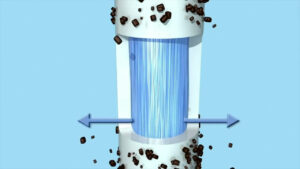
Here’s the deal: Membrane filtration isn’t magic—it’s physics at play. You start with a feed stream (that’s the liquid or gas you want to clean). Then, you apply pressure to push it against a membrane. This membrane has tiny pores that let some stuff through while blocking others.
The result? Two streams emerge. The permeate is the clean stuff that passes through. The retentate (or concentrate) holds back the rejected particles. Simple, right?
But here’s the thing: The key is the pore size. It determines what gets filtered out. For example, in water treatment, membranes can snag bacteria, viruses, or even dissolved salts. I’ve seen this in action during a visit to a wastewater plant—pressure drives the process, and no chemicals are needed for the core separation.
Pro tip: Always match the membrane to your needs. Too big pores, and contaminants slip through. Too small, and you’ll waste energy on high pressure.
The Four Main Types of Membrane Filtration
Not all membranes are created equal. They come in different flavors based on what they filter. Let’s break them down into the big four. I’ll use a table here for clarity, like I do in my SEO guides to make complex info digestible.
| Type | Pore Size | What It Removes | Common Applications |
|---|---|---|---|
| Microfiltration (MF) | 0.1 to 10 μm | Bacteria, suspended solids, large colloids | Juice clarification, wastewater pretreatment |
| Ultrafiltration (UF) | 0.01 to 0.1 μm (10-100 nm) | Viruses, proteins, smaller colloids | Dairy processing, drinking water purification |
| Nanofiltration (NF) | 0.001 to 0.01 μm (1-10 nm) | Divalent ions, small organics, color | Water softening, pesticide removal |
| Reverse Osmosis (RO) | Less than 0.001 μm (1 nm) | Salts, ions, bacteria, viruses | Seawater desalination, ultra-pure water |
Starting with microfiltration. This is your entry-level option—low pressure, big pores. It’s great for removing chunky stuff like suspended solids. In the food industry, it’s a staple for clarifying beer or juice. I remember testing a MF system in a small brewery; it turned hazy brews crystal clear without killing the flavor.
Next up: ultrafiltration. Finer pores mean it tackles viruses and proteins. Pressure ramps up a bit, but it’s still efficient. Dairy farms love this for concentrating milk—keeps nutrients in while ditching water. In my experience reviewing filtration setups, UF shines in biotech for purifying vaccines.
Then there’s nanofiltration. This one’s a middle child—removes divalent ions like calcium but lets some monovalent ones through. Ideal for softening hard water or stripping color from dyes. I’ve seen NF in action for pesticide removal in agriculture; it’s a lifesaver for eco-friendly farming.
Finally, reverse osmosis. The heavyweight champ. Tiny pores block almost everything, including salts. Needs high pressure (up to 40+ bar), but it’s unbeatable for desalination. Fun fact: Over 50% of the world’s desalinated water comes from RO, according to a 2025 report from the International Desalination Association. I personally recommend RO for high-purity needs, like in electronics manufacturing.
Key Components of a Membrane Filtration System
You can’t just slap a membrane in and call it done. A solid system has several parts working together. Let me walk you through them.
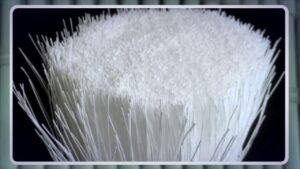
First, the membrane itself. Often spiral-wound for compactness—flat sheets layered with spacers around a tube. Other configs like hollow fiber or tubular handle high-solids feeds better. In challenging waters, fouling-resistant designs (like some hydrophilic surfaces) cut down on cleaning.
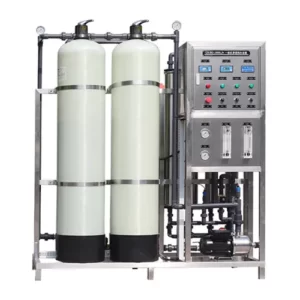
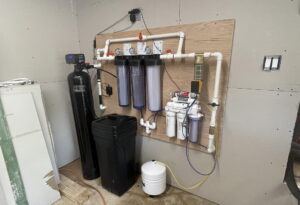
Then, feed pumps and pressure vessels. These create the driving force. Without proper pressure, nothing happens. Control systems monitor flow and alert for issues.
Don’t forget pre-treatment filters, like cartridges, to protect the membrane from big particles. And post-treatment, such as UV disinfection, ensures the permeate is safe.
In my years analyzing these systems, I’ve found that integrating electrodeionization or ozone can turn a good setup into a powerhouse for complete purification.
Cross-Flow vs. Dead-End Filtration: Which Wins?
Membrane filtration isn’t one-size-fits-all in flow modes either. You’ve got two main approaches.
Cross-flow filtration keeps the feed moving parallel to the membrane. This sweeps away buildup, reducing fouling. It’s standard for RO and UF—extends membrane life and boosts recovery rates up to 95%. I swear by cross-flow for variable water quality; it’s more reliable.
On the flip side, dead-end filtration pushes straight into the membrane. Simpler and higher recovery in low-fouling scenarios, but it clogs faster. Best for clean feeds, like pre-filtered municipal water.
The bottom line? Cross-flow matters more for industrial apps with dirty inputs. In a 2025 study by Veolia, cross-flow systems showed 30% longer run times in brine concentration.
Real-World Applications of Membrane Filtration
This tech isn’t just theory—it’s everywhere. Let’s hit the highlights.
In water treatment, it’s a hero. From municipal drinking water to wastewater reuse, membranes remove pathogens and salts. Desalination plants in arid regions rely on RO to turn seawater fresh. I’ve consulted on setups where NF softens well water, slashing scale buildup in pipes.
The food and beverage industry? Massive user. Clarifying wine, beer, or juice without additives—MF and UF keep flavors intact. Dairy processing concentrates whey protein, turning waste into profit. A case study from Alfa Laval showed 20% yield boosts in cheese production.
Pharmaceuticals and biotech demand ultra-pure water. RO and UF purify drugs and vaccines. In 2025, with biotech booming, membranes ensure sterile conditions without heat damage.
Industrial processes round it out—oil-water separation, electronics rinsing, even mining effluent cleanup. One example: Veolia’s systems recover byproducts like acids from brine, supporting circular economies.
But here’s a pro tip: Always pilot-test for your specific feed. What works in dairy might flop in mining due to fouling risks.
Benefits and Advantages: Why Choose Membrane Filtration?
Why bother with this over traditional methods? Let’s count the ways.
Efficiency and cost savings. No chemicals for core filtration means lower OPEX. Energy use is dropping too—ultra-low energy membranes like Veolia’s AK H Series run at lower pressures, cutting bills by 15-20%.
Versatility. Handles everything from brackish water to viscous slurries. Scalable from home units to massive plants.
High purity. Rejects up to 99.8% of contaminants, per 2025 specs. Great for meeting regs on PFAS or nitrates.
Sustainability. Reduces waste, enables reuse. In a world facing water scarcity, this is huge—membranes reclaim 80%+ of wastewater in some setups.
In my experience, the ROI kicks in fast. One client switched to UF for wastewater and saw payback in under a year through water savings.
Drawbacks? Fouling can happen if not managed. But regular cleaning and anti-fouling designs mitigate that.
Materials and Configurations: Picking the Right Membrane
Membranes vary by material too. Organic polymers like polysulfone or PVDF are common for liquids—hydrophilic for low fouling, hydrophobic for gases.
Inorganic ceramics, like silicon carbide, handle extreme pH (0-14) and temps up to 800°C. LiqTech’s SiC membranes are abrasion-resistant, lasting years in harsh environments.
Configurations? Spiral-wound for compact RO. Hollow fiber for UF pretreatment. Tubular for high-solids.
I always advise: Match material to your fluid. Aggressive chemicals? Go ceramic. Budget-friendly water? Polymer wins.
Emerging Trends in Membrane Filtration for 2025
Looking ahead, tech is evolving. Fouling-resistant innovations use nanotechnology for self-cleaning surfaces. Expect 25% less downtime.
Integration with AI for predictive maintenance—sensors flag issues before they spike costs.
Sustainability pushes like zero-liquid discharge systems recover 99% of water. A 2025 report from the Water Research Foundation predicts 40% growth in reuse apps.
In my view, hybrid systems (membranes + electrodialysis) will dominate for brine management.
How to Get Started with Membrane Filtration
Ready to implement? Start small.
Assess your needs: What contaminants? Flow rate? Budget?
Consult experts—firms like Veolia or Alfa Laval offer pilots.
Install and monitor: Track pressure drops, rejection rates.
Optimize: Tweak pre-treatment to extend life.
Pro tip: Budget for maintenance—clean-in-place systems save headaches.
Wrapping Up: The Future of Clean Fluids
There you have it—a deep dive into membrane filtration. From basics to advanced apps, this tech is transforming how we handle liquids and gases. Whether you’re in water treatment or food processing, understanding what is membrane filtration can unlock efficiency and sustainability. In my experience, it’s not just a tool—it’s a must-have for 2025 and beyond. Got questions? Drop them below.



 English
  German
  Spanish
  French
  Italian
  Russian
  Turkish
  Dutch
Dutch  Polish