
Electrodeionization (EDI) technology significantly advances water purification systems, combining ion exchange and electrodialysis to deliver high-purity water. This article delves into the principles behind EDI modules, exploring their design, functionality, and benefits in various industrial applications.

Understanding Electrodeionization (EDI)
Electrodeionization (EDI) represents a leap forward in water purification technology, merging the benefits of two established methods: ion exchange and electrodialysis. This synergy enhances water purification efficiency and eliminates the need for chemical regenerants, making EDI a green technology. At its core, the principle of the EDI module in the water system lies in its ability to remove ionizable species from water through electrically active media and an electrical potential difference.
What Is the Principle of Edi Module in Water System?
Electrodeionization (EDI) is a water treatment technology that uses electricity, ion exchange membranes, and resin to deionize water and remove impurities. EDI works by ionizing water molecules into H+ and OH- ions using a direct current (DC) electric field. These ions then migrate through ion exchange resins and membranes, continuously regenerating the resin and removing contaminant ions.
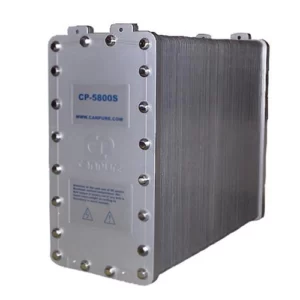
The EDI module comprises chambers filled with ion-exchange resins and separated by ion-exchange membranes. When water enters the module, an electrical field is applied at right angles to the flow, which forces ions to move through the resins and across the membranes. The impurity ions are not permanently bound to the media but instead are collected into concentrate streams that can be directed to drain or recycled. The deionized product water can be used directly or undergo further treatment to enhance its purity.
Benefits of Edi Module
EDI has several advantages over other water purification technologies. It is a chemical-free process and does not require chemicals for regeneration like conventional ion exchange systems. EDI also provides stable water quality, is easily controlled automatically, and has low operating costs. Additionally, EDI can produce water with resistivity requirements of 10-15MΩ.cm (25°C) is suitable for preparing pure water in various industries.
Components of an EDI Module
An EDI module’s effectiveness hinges on its three main components:
- Ion Exchange Resins: These resins trap and remove ions from the water, playing a crucial role in deionization.
- Ion-Selective Membranes: These membranes are selective barriers that allow either anions or cations to pass while blocking others, facilitating the separation of ions from the water.
- Electrodes: Positioned at either end of the module, these electrodes create the electric field necessary for driving the ion exchange process.
Advantages of Using EDI Technology
EDI technology stands out for its numerous advantages over traditional deionization methods:
- Chemical-Free Process: EDI eliminates the need for hazardous chemical regenerants, aligning with environmental sustainability goals.
- Continuous Operation: The electrical regeneration of resins allows for uninterrupted operation, ensuring a consistent supply of high-purity water.
- High Purity Water: EDI can achieve water purity levels essential for critical applications in industries such as pharmaceuticals and semiconductors.
Applications of EDI Module in Water Systems
The versatility of EDI technology has led to its adoption across a wide range of industries, including:
- Pharmaceuticals: Where ultra-pure water is a prerequisite for manufacturing processes.
- Power Generation: EDI provides the high-purity water needed for boiler feed water and cooling systems.
- Semiconductor Manufacturing: The production of semiconductors requires water free from ions and other contaminants.
Challenges and Solutions in EDI Implementation
Implementing EDI systems can encounter challenges like feed water quality and membrane fouling despite its benefits. Addressing these challenges involves pre-treatment processes to improve feed water quality and regular maintenance to ensure the longevity and efficiency of the membranes.
Future of EDI Technology
The future of EDI technology is promising, with ongoing research focused on enhancing membrane efficiency, reducing energy consumption, and integrating EDI systems with renewable energy sources. These advancements are expected further to solidify EDI’s role in sustainable water purification.
Conclusion
The principle of the EDI module in water systems offers a sophisticated and sustainable solution for meeting the high-purity water requirements of various industries. As technology evolves, EDI is poised to become an even more integral part of global water treatment strategies, contributing to environmental sustainability and the efficient use of resources.




 English
  German
  Spanish
  French
  Italian
  Russian
  Turkish
  Dutch
Dutch  Polish