
Quick Answer
A filter press separates liquids from solids using pressure filtration, transforming wet slurry into dry cakes and clean water. Industries achieve 60-80% solids content in final cakes, with typical ROI in 6-18 months through reduced disposal costs and water recovery.
If you’re dealing with any kind of industrial slurry, wastewater, or liquid-solid mixture, understanding filter press technology can save you serious money. We’re talking about turning disposal headaches into efficient operations.
In this guide, as a professional filter press manufacturer, let me break down everything you need to know about these workhorses of industrial filtration.
What Is a Filter Press?
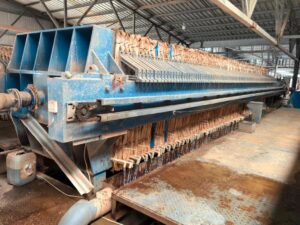
A filter press is basically a pressure-driven separation machine. Think of it as a super-powered strainer on steroids.
Here’s how it works:
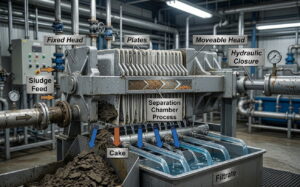
You pump in a mixture of liquid and solids (called slurry). The machine uses pressure filtration to squeeze out the liquid through special filter cloths, leaving you with:
- Clean water (filtrate) that exits through drainage ports
- Solid cakes that stay trapped inside
Pretty simple concept. But the results?
Game-changing.
In fact, I’ve seen operations cut their waste disposal costs by 70% just by implementing the right filter press system.
What Does a Filter Press Do?
A filter press separates liquids from solids using pressure filtration, transforming wet slurry into dry cakes and clean water.
Whether you’re dealing with mining tailings, chemical processing waste, or municipal sludge, filter press technology offers a proven solution for separation challenges.

Breaking Down How Filter Presses Actually Work
Let’s get into the nuts and bolts.
A filter press operates in distinct phases:
1. The Fill Cycle
First up, a high-pressure pump forces your slurry into hollow chambers formed between filter plates. These aren’t just any plates – they’re specially designed with recessed areas that create spaces when clamped together.
(Pro tip: The pump pressure here is critical. Too low and you get poor separation. Too high and you risk damaging the filter cloths.)
2. Filtration Phase
This is where the magic happens.
As pressure builds:
- Liquid passes through the filter cloth
- Solids get trapped and start forming a layer
- This layer actually helps the filtration process by creating an additional barrier
The cool part? The solids themselves become part of the filtering mechanism.
3. Cake Formation
As more slurry enters, solids continue building up inside each chamber. Eventually, you get a dense, semi-dry “cake” of solid material.
Think of it like making a pressed sandwich – except instead of cheese and ham, you’re compressing industrial solids.
4. Discharge Time
Once the chambers are full:
- Pressure releases
- Plates separate (usually automatically)
- Solid cakes fall out into collection areas
The whole cycle? Anywhere from 30 minutes to 4 hours, depending on your material.
Why Industries Can’t Live Without Filter Presses
Here’s what makes filter presses indispensable:
Efficiency That Actually Matters
Most filter presses achieve 60-80% solids content in the final cake. Compare that to settling ponds (maybe 20-30% if you’re lucky) and you see why this matters.
Versatility Across Industries
Check out where these machines shine:
| Industry | What They Filter | Why It Matters |
|---|---|---|
| Mining | Ore concentrates, tailings | Metal recovery, waste reduction |
| Chemical | Process byproducts | Product purity, resource recovery |
| Food & Beverage | Wine lees, brewing waste | Regulatory compliance, water reuse |
| Wastewater | Municipal sludge | Volume reduction, disposal costs |
Cost Savings That Add Up
I’ve worked with facilities that saw ROI in under 12 months. How?
- Reduced hauling costs (drier cakes = less weight)
- Water recovery and reuse
- Lower disposal fees
- Minimal operator intervention
The Technical Components That Make It All Work
Understanding the key parts helps you optimize performance:
Filter Plates
The backbone of the system. Modern plates come in:
- Recessed chamber design (most common)
- Membrane plates (for extra squeezing action)
- Plate-and-frame style (older but still useful)
Filter Cloths
This is where material science meets practicality. Different cloths for different applications:
- Polypropylene for general use
- Polyester for high temperatures
- Special weaves for fine particle capture
Hydraulic Systems
What provides the squeeze. Typical pressures range from 100-225 PSI, though some specialized units go higher.
(Here’s something most people don’t realize: Higher pressure doesn’t always mean better results. It’s about matching pressure to your specific slurry characteristics.)
Control Systems
Modern filter presses aren’t just mechanical beasts. They include:
- PLC controls for automated operation
- Pressure monitoring
- Cycle optimization
- Remote monitoring capabilities
Real-World Applications That Prove the Value
Let me share some concrete examples:
Mining Operations
A copper mine in Arizona implemented high-pressure filter presses for tailings dewatering. Results?
- Cake moisture dropped from 25% to 15%
- Water recovery increased by 85%
- Annual savings: $2.3 million
Municipal Wastewater
A treatment plant serving 500,000 people switched from belt presses to filter presses:
- Sludge volume reduced by 65%
- Disposal costs cut in half
- Filtrate quality improved dramatically
Chemical Manufacturing
A specialty chemical producer filtering catalyst slurry:
- Product recovery increased from 92% to 99%
- Batch time reduced by 40%
- ROI achieved in 8 months
Choosing the Right Filter Press Configuration
Not all filter presses are created equal. Here’s what to consider:
Size Matters
Filter presses range from tiny lab units (150mm plates) to massive industrial systems (2000mm plates).
The key? Don’t oversize. A properly sized unit running at capacity beats an oversized unit running half-empty every time.
Automation Levels
Your options:
- Manual: Operator opens/closes, removes cakes by hand
- Semi-automatic: Automated closing, manual cake discharge
- Fully automatic: Push-button operation, automatic cake discharge
(In 2026, I’m seeing more facilities jump straight to full automation. The labor savings alone justify the investment.)
Special Features Worth Considering
- Cake washing systems: For when you need pure solids
- Membrane squeeze: Extra dewatering for difficult materials
- Core blow systems: Prevents feed port clogging
- Cloth washing: Extends cloth life dramatically
Optimizing Your Filter Press Performance
Want to squeeze every bit of efficiency from your system? Here’s what actually works:
1. Feed Consistency Is King
Variations in solids concentration wreak havoc on cycle times. Pre-thickening with a clarifier or DAF system can work wonders.
2. Chemical Conditioning
The right flocculants and coagulants can:
- Improve capture rates
- Reduce cycle times
- Create more permeable cakes
But here’s the catch: More chemicals isn’t always better. Test and optimize.
3. Pressure Profiles
Start low, ramp up gradually. Slamming to full pressure immediately can:
- Blind the cloths
- Create uneven cakes
- Reduce cloth life
4. Maintenance That Matters
Focus on:
- Regular cloth inspection (monthly)
- Leak checks on hydraulics (weekly)
- Plate alignment verification (quarterly)
Skip the fancy stuff. These basics prevent 90% of problems.
The Future of Filter Press Technology
Here’s what’s coming down the pipeline:
Smart Monitoring
AI-driven systems that predict maintenance needs and optimize cycles in real-time. I’m already seeing 15-20% efficiency gains from early adopters.
Advanced Materials
New cloth materials and plate coatings that extend life and improve release characteristics.
Integration Technologies
Filter presses talking to upstream and downstream equipment, creating truly automated processing lines.
Making the Investment Decision
Bottom line time.
A filter press makes sense when:
- You’re hauling liquid waste off-site
- Disposal costs are eating your budget
- You need to recover water or valuable solids
- Environmental compliance is tightening
The typical payback? 6-18 months for most applications.
But here’s what most vendors won’t tell you: Implementation matters more than equipment.
The best filter press poorly operated loses to an average unit run properly every single time.



 English
  German
  Spanish
  French
  Italian
  Russian
  Turkish
  Dutch
Dutch  Polish