
If you’re dealing with sludge dewatering, you’ve probably asked yourself: “Should I go with a screw press or a filter press?”
It’s a great question. And the answer? Well, it depends on what you’re trying to accomplish. Both technologies can turn your watery sludge into manageable solids. But they work in completely different ways.
Today, as a professional filter press manufacturer, I’ll break down the screw press vs filter press debate so you can make the right choice for your operation.
Quick Summary:
- Screw presses run continuously with low energy use but produce wetter cake (15-25% solids), making them ideal for biological sludges where moderate dryness is acceptable.
- Filter presses operate in batches with higher energy consumption but achieve superior cake dryness (30-60% solids), perfect for industrial applications where disposal costs dominate.
- Choose a screw press for simplicity and energy efficiency; choose a filter press when maximum dryness is critical.
- Calculate your 5-year total cost of ownership including disposal costs to make the right decision.
What’s a Screw Press (And How Does It Work)?
A screw press is like a giant juicer for sludge.
Here’s how it works:
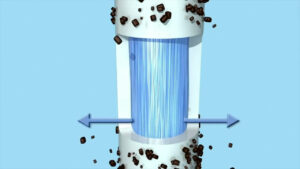
You feed sludge into one end. A rotating screw slowly pushes it through a cylindrical screen. As the sludge moves forward, the screw compresses it more and more. Water drains out through the screen. And boom – you get dewatered cake out the other end.
The best part? It runs continuously. No stopping and starting. Just constant, steady dewatering.
Key components include:
- A rotating screw (or auger)
- A cylindrical screen
- An inlet for sludge
- Outlets for water and cake
I’ve seen these things handle everything from municipal wastewater to food processing waste. They’re workhorses.
What’s a Filter Press (And Why Should You Care)?
Now, a filter press is a totally different beast.
Think of it like a giant sandwich maker that squeezes water out of sludge.
Here’s the process:
- A series of plates close together to form chambers
- You pump sludge into these chambers under high pressure
- Water gets forced through filter cloths
- Solids stay behind and form a “cake”
- Open the plates, and the cake drops out
Unlike screw presses, filter presses work in batches. Fill, squeeze, empty. Repeat.
The main components:
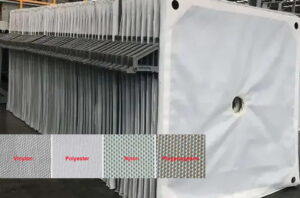
- Filter plates (lots of them)
- Filter cloths
- A hydraulic system to close the plates
- A high-pressure feed pump
These machines are the go-to choice when you need REALLY dry cake. We’re talking 30-60% solids or even higher.

Screw Press vs Filter Press: Key Differences
Let me break down the real differences between these two technologies:
1. Continuous vs. Batch Operation
Screw press: Runs 24/7. Feed sludge in, get cake out. No interruptions.
Filter press: Works in cycles. Fill it up, press it, empty it. Then start over.
This is huge. If you’ve got a steady stream of sludge, continuous operation saves time and labor.
2. Cake Dryness (This is Big)
Here’s where things get interesting:
Screw press: Typically produces 15-25% dry solids. Sometimes up to 30% with advanced models.
Filter press: Crushes it with 30-60% dry solids. I’ve seen some hit 70% with the right sludge.
Why does this matter? Drier cake = lower disposal costs. Period.
3. Energy Consumption
Screw press: Uses way less energy. We’re talking 50-70% less than many alternatives.
Filter press: Higher energy use due to high-pressure pumps and hydraulics.
Your electricity bill will thank you if you go with a screw press. But remember – you’re trading energy savings for wetter cake.
4. Maintenance Requirements
Screw press: Low maintenance. Clean the screen occasionally. Replace worn parts every few years.
Filter press: More maintenance intensive. Filter cloths need regular replacement. Hydraulic systems need attention.
(In my experience, maintenance costs can make or break your ROI.)
5. Space Requirements
Screw press: Compact design. Fits in tight spaces.
Filter press: Needs more room. You need space for plate movement and maintenance access.
Got a cramped facility? Screw press might be your answer.
Screw Press vs. Filter Press Comparison Table
| Differences | Screw Press | Filter Press |
|---|---|---|
| Operation Mode (Continuous vs. Batch) | Continuous operation, runs 24/7; sludge in and cake out with no interruptions | Batch operation; fill, press, empty, then repeat |
| Cake Dryness (Key Difference) | Typically 15–25% dry solids; advanced models can reach ~30% | Typically 30–60% dry solids; with suitable sludge can reach ~70% |
| Energy Consumption | Much lower energy use; about 50–70% less than many alternatives | Higher energy use due to high‑pressure pumps and hydraulic systems |
| Maintenance Requirements | Low maintenance; occasional screen cleaning and infrequent replacement of wear parts | More maintenance‑intensive; regular filter cloth replacement and hydraulic system upkeep |
| Space Requirements | Compact design; suitable for tight spaces | Larger footprint; requires space for plate movement and maintenance access |
When to Choose a Screw Press
Here’s when a screw press makes sense:
You want continuous operation. No batch processing headaches.
Energy costs are a concern. These things sip power compared to alternatives.
You’re dealing with biological sludge. Municipal wastewater? Food processing waste? Perfect.
Space is limited. Their compact footprint is a lifesaver.
You need minimal operator attention. Set it and (mostly) forget it.
Moderate cake dryness is acceptable. If 20-25% solids works for your disposal method, you’re golden.
I’ve seen screw presses work wonders at small to medium wastewater plants. The operators love the simplicity.
When a Filter Press is Your Best Bet
Filter presses shine in these situations:
Maximum dryness is critical. Need 50%+ solids? Filter press all the way.
You’re handling industrial sludge. Chemical plants, mining operations, pharmaceuticals – filter presses handle the tough stuff.
Filtrate quality matters. Filter presses produce crystal-clear filtrate.
Batch processing works for you. Got storage tanks? Can handle intermittent operation? Perfect.
You need to handle diverse sludge types. Filter presses are versatile beasts.
One client of mine in chemical manufacturing switched to a filter press and cut their hazardous waste disposal costs by 70%. The ultra-dry cake made all the difference.
Real-World Performance Comparison
Let me share some actual numbers from installations I’ve worked with:
Municipal WWTP with Screw Press:
- Feed: 2% solids activated sludge
- Output: 22% dry cake
- Energy use: 15 kWh/dry ton
- Polymer consumption: 8-10 kg/dry ton
- Operator time: 1 hour/day
Industrial Facility with Filter Press:
- Feed: 3% chemical sludge
- Output: 55% dry cake
- Energy use: 45 kWh/dry ton
- Polymer consumption: 3-5 kg/dry ton
- Operator time: 3 hours/day
See the trade-offs? Higher energy and labor for the filter press, but look at that cake dryness!
Cost Breakdown (The Numbers You Need)
Let’s talk money:
Capital Costs
Screw press: Generally 20-30% less expensive upfront
Filter press: Higher initial investment due to complexity
Operating Costs
Screw press:
- Lower energy costs
- Higher polymer costs
- Minimal labor
- More frequent disposal (wetter cake)
Filter press:
- Higher energy costs
- Lower polymer costs
- More labor intensive
- Less frequent disposal (drier cake)
Pro tip: Calculate your 5-year total cost of ownership. Include disposal costs – they often tip the scales.
Making the Right Choice
Here’s my framework for choosing:
Step 1: Define your priorities
- Is cake dryness critical?
- How important is energy efficiency?
- Do you need continuous operation?
Step 2: Analyze your sludge
- What’s the consistency?
- How does it dewater?
- What’s the volume?
Step 3: Consider your constraints
- Available space?
- Budget limitations?
- Operator availability?
Step 4: Run the numbers
- Get quotes for both technologies
- Calculate operating costs
- Factor in disposal costs
Step 5: Test if possible
- Many vendors offer pilot testing
- See real results with your actual sludge
Common Mistakes to Avoid
I’ve seen people mess this up. Don’t be like them:
Mistake #1: Focusing only on purchase price. Operating costs matter more long-term.
Mistake #2: Ignoring disposal costs. A drier cake can save thousands annually.
Mistake #3: Not considering future needs. Will your sludge volume double in 5 years?
Mistake #4: Skipping pilot testing. Your sludge is unique – test it!
The Bottom Line
Both technologies work. But they excel in different situations.
Choose a screw press if: You value simplicity, energy efficiency, and continuous operation. Perfect for biological sludges where moderate dryness works.
Choose a filter press if: Maximum dryness is your goal. Ideal for industrial applications where disposal costs dominate.
The screw press vs filter press decision ultimately comes down to your specific needs. There’s no universal “best” option – only the best option for your situation.
Want my advice? Start by calculating your disposal costs at different cake dryness levels. This often reveals the clear winner for your application.
Remember: The right dewatering technology can transform your sludge management from a headache into a smooth operation. Choose wisely, and you’ll reap the benefits for years to come.



 English
  German
  Spanish
  French
  Italian
  Russian
  Turkish
  Dutch
Dutch  Polish