
Making an investment in any new industrial equipment requires careful consideration of the costs versus the benefits. For smaller operations with limited budgets, a filter press can seem like a significant upfront expenditure. However, modern filter press systems provide cost-effective water filtration and waste management solutions across industries when designed and operated properly.
In this post, as a professional filter press manufacturer, I will discuss whether a filter press is affordable.

How Do Filter Presses Work?
Before evaluating if a filter press system is affordable for your facility, it helps to understand what exactly a filter press is and what it does.
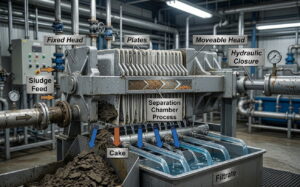
A filter press is an industrial machine designed for solid-liquid separation. The key components of a filter press include:
- Filter plates and frames
- Filter cloths or membranes
- Slurry feed pump
- Filtrate and cake discharge ports
The filter plates compressed together in a frame provide chambers that capture the filtered solids. The pump feeds the slurry into these chambers under pressure. Clean water passes through the filter cloths while the solids build up into solid filter cakes.
Once the chambers fill up with cakes, the liquid gets cleanly separated out. The solid cakes then get ejected out of the filter press unit. This leaves you with dry solid cakes for disposal and clean filtrate water for recycling or reuse.
How a Filter Press Works
So in summary, a filter press efficiently:
- Removes solids from liquids
- Provides dry solids for disposal
- Allows water recycling
And this principle remains the same whether for a small plate and frame filter press or a large membrane filter press system.
What Impacts Filter Press Affordability?
When considering affordability, you must analyze both:
- Initial Investment Costs: This includes the base price of the filter press unit along with any additional installation requirements.
- Operating Costs: These costs recur over months and years, including maintenance, parts replacements, energy consumption, and more.
Optimizing these costs is key for long term savings. Let’s analyze these factors in detail:
Initial Purchase and Installation Costs
The initial price of a filter press depends significantly on:
- Production capacity: Larger units with higher throughputs generally cost more.
- Level of automation: Manual, semi-automatic or fully automated systems have vastly different price tags.
- Additional features and customization: Special filter cloths, advanced PLCs, and other features impact costs.
- Manufacturer and brand: The reputation and reliability of the equipment vendor affects pricing.
In addition to the base equipment price, the installation of a filter press requires ancillary equipment and site preparation work, including:
- Site excavation and concrete foundations: Prep work costs depend on the size of the filter press foundations and concrete volumes required.
- Slurry tanks and transfer pumps: These feed the filter press and their sizing depends on production throughput.
- Piping, valves and fittings: Requirements for pumps, pipes and fittings add to expenses in materials and labor.
- Electrical and control panels: Electrical cabling, panels, sensors and switches enable automation.
- Logistics and transportation: Delivery and installation coordination fees apply for the filter press system.
So the initial budget must account for both filtration equipment and its installation.
Operating and Maintenance Costs
While the upfront price tag of a filter press can seem high, much of your long term expenses depend on operating and maintaining the system efficiently. These include:
Energy consumption: Pumps, motors and automation systems consume electricity. Optimize energy use by operating only when necessary, sizing equipment appropriately and upgrading older motor systems.
Spares and parts replacement: Filter cloths, membranes, pumps and electric components have limited working lifespans. Replacing parts regularly reduces unexpected failures.
Equipment monitoring: Though automation reduces manual oversight time, technicians must still periodically check valves, sensors, pumps and other components.
Scheduled maintenance: Following prescribed preventive maintenance steps will extend equipment lifespan significantly. This includes lubrication, calibration, cloth washing cycles, inspections and so on.
Labor requirements: While automatic filter press models require far less manual work, all systems still need some operator oversight for monitoring, testing and troubleshooting issues.
Professional servicing contracts: Consider contracting with filtration specialists for annual maintenance checks, cloth replacements and periodic servicing calls. This provides expert servicing for optimized performance.
Solids disposal: How you dispose of or reuse filter cakes from the press affects operating budgets over long term system usage.
Water reuse credits: Though site-dependent, recycling press filtrate instead of using clean freshwater may provide financial credits in some municipalities.
Carefully evaluating these recurring expenses will determine if your filter press provides a suitable return on investment for years after installing the initial system.
Is a Filter Press Affordable?
The short answer is yes: Modern filter press systems can be cost-effective solutions when designed and operated properly.
For smaller industrial facilities and laboratories, plate and frame filter press units provide affordable automation for water recycling and waste filtering. Even larger membrane filter presses effectively handle huge throughputs while minimizing operation expenses.
Let’s explore a few affordable filter press solutions for different applications and budgets:
Case Study: Small Steel Manufacturing Facility
A smaller machine shop generating 10 gallons per minute of oily wastewater needed an affordable solution for water recycling and sludge filtering before municipal wastewater disposal.
They opted for a 350 x 350 mm automatic filter press system with full automation. This compact unit fit within their space constraints, met their limited throughput needs and enabled unattended filtration cycles.
Over 3 years, this filter press investment recovered costs by:
- Recycling ~80% of water
- Reducing freshwater usage, sewer fees and treatment chemicals
- Requiring only periodic maintenance checks
Compare this affordable automation to the alternative – manual gravity filtration, sedimentation lagoons and extensive operator hours previously spent on their inadequate separation process.
Case Study: Large Cement Facility
A cement plant required improved solid-liquid separation for their wastewater slurries averaging 75 m3/hour. Attempting this manually would be challenging.
They chose an automated 1500 x 1500 mm membrane filter press system. Though this capacity of filter press required a heavy initial investment, over months and years it provided huge savings.
This large filter press now automatically handles huge throughputs around the clock, providing:
- 90% water recycling even with fluctuating flow rates
- Dry filter cakes reducing disposal costs
- Minimal labor oversight even with 24/7 operation
- Built-in sensors for preventive maintenance
The high-volume, reliable and low-maintenance performance of this filter press system delivered a fast return on their capital investment.
Cost Comparison: Budget Manual vs. Automated Presses
A key factor in filter press affordability is automation. Manual filter press models involve frequent operator intervention to assemble, fill, shift plates and clean the system. Automatic filter presses minimize labor via built-in programmable logic.
While basic manual plate and frame filter press systems are available from $8,000 to $15,000, their low cost gets eclipsed by extensive labor expenses and production downtimes. Fully automatic filter press systems start around $30,000 but pay back their price premium quickly by enabling 24/7 unattended operation.
Making Filter Presses Affordable
While filter presses involve considerable upfront budgets for equipment and installation, optimizing these machines for water recycling, waste minimization and automation provides significant long term savings.
Even smaller industrial facilities and labs can benefit from compact, automated filter press solutions for their liquid/solid separation needs while controlling ongoing costs through:
- Preventive maintenance to maximize lifespan
- Regular servicing contracts with specialists
- Optimizing cycles to save energy and supplies
- Selling or reusing filter cake byproducts
So if designed, installed and operated properly, modern filter presses can be very cost-effective investments for water filtration across industries.
Contact filtration equipment specialists to request custom quotes for your specific waste slurry conditions and production parameters. This helps appropriately size and budget for a suitable filter press system meeting your affordability constraints.



 English
  German
  Spanish
  French
  Italian
  Russian
  Turkish
  Dutch
Dutch  Polish