
Ever wonder how industries separate massive amounts of solids from liquids without breaking a sweat?
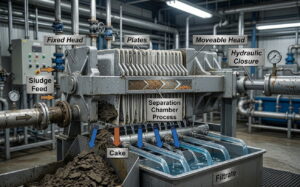
How does a filter press work? A filter press works by pushing liquid through filter cloths under heavy pressure. Solids get caught inside sealed plates, while the cleaned liquid slips out through the fabric and drains away.
I’ve watched these machines turn sloppy sludge into dry, stackable cakes and clear, clean liquid. Today, as a professional filter press manufacturer, I’m laying out how they actually make that industrial trick happen.

What Makes a Filter Press Tick
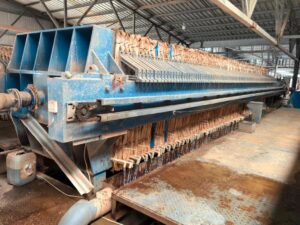
A filter press isn’t just one big filter. It’s actually a series of plates squeezed together like a massive sandwich. Each plate has a recessed area covered with filter cloth, and when pressed together, these create sealed chambers.
Here’s what happens:
- Slurry gets pumped in (that’s your liquid-solid mixture)
- Pressure builds up inside the chambers
- Liquid passes through the filter cloth
- Solids stay behind, forming a “cake”
The beauty? You can process enormous volumes in one batch.

How Does a Filter Press Work? 4 Critical Stages
Stage 1: The Fill-Up Phase
This is where the action starts.
Your feed pump pushes slurry into the press through a central port. The mixture spreads evenly across all the chambers between the plates.
Think of it like filling up a series of flat balloons with muddy water.
Pro Tip: The filling speed matters. Too fast? You’ll get uneven distribution. Too slow? You’re wasting time and money.
Stage 2: Filtration and Cake Building
As more slurry gets pumped in, pressure keeps climbing. Liquid gets shoved through the tiny holes in the filter cloth. Here’s the catch though: the solids are too big to make it through. Simple as that.
The solids start piling up on the cloth surface, creating a layer. And guess what? That layer of solids actually becomes a secondary filter, catching even smaller particles.
I’ve seen cake thickness run anywhere from about half an inch to well past two inches, all based on the job at hand.
Stage 3: Consolidation (Where the Magic Happens)
This is the game-changer stage.
Modern filter presses don’t just stop at basic filtration. Many use:
- Membrane squeeze plates that inflate like airbags
- Core blow systems that push compressed air through the cake
- Cake wash systems for removing impurities
These extras can reduce moisture content from 80% down to 35% or less.
(That’s the difference between wet mud and something you can actually shovel.)
Stage 4: Cake Discharge
Time to harvest those solids.
The press opens up, plates separate, and gravity does the rest. The dried cake falls into hoppers or onto conveyors below.
Some high-end systems automate this entirely with plate shifters that open each chamber in sequence.
The bottom line? The whole cycle typically takes 20 minutes to 2 hours, depending on your material.
Key Components That Make It All Work
Let’s break down the essential parts:
The Frame (The Backbone)
This heavy-duty steel structure holds everything together. It needs to withstand serious pressure – we’re talking 225 to 900 PSI in most applications.
Filter Plates (The Workhorses)
These come in different flavors:
- Recessed chamber plates (most common)
- Membrane plates (for extra dewatering)
- Plate-and-frame design (old school but still effective)
Materials range from polypropylene (lightweight, chemical resistant) to cast iron (when you need serious durability).
Filter Cloth (The Unsung Hero)
This is where the actual filtering happens.
Your cloth selection can make or break your operation. Options include:
- Polypropylene (general purpose)
- Polyester (high temperature)
- Nylon (abrasion resistance)
- PTFE (extreme chemical resistance)
Pore sizes typically range from 1 to 100 microns.
The Hydraulic System (The Muscle)
That closing force clamps the plates tight. Fall short on pressure and leaks show up fast, along with lousy results.
Most setups run around 3,000 to 4,000 PSI hydraulically, which turns into hundreds of tons pushing everything shut. Right.
Real-World Applications
Here’s where filter presses really shine:
Mining and Mineral Processing
I’ve seen filter presses handle everything from copper concentrate to coal tailings. One mining operation I consulted for reduced their water usage by 70% just by switching from settling ponds to filter presses.
Wastewater Treatment
Municipal plants use these to turn sewage sludge into manageable biosolids. The volume reduction? Often 90% or more.
Food and Beverage
Breweries, wineries, and juice producers rely on filter presses for clarification and waste processing. That craft beer clarity? Thank a filter press.
Chemical Manufacturing
When you need to recover valuable products from process streams, filter presses deliver. Plus, they handle aggressive chemicals that would destroy other equipment.
Optimizing Your Filter Press Performance
Want better results? Here’s what actually moves the needle:
1. Match Your Cloth to Your Application
Wrong cloth = poor performance. Period.
Consider:
- Particle size distribution
- Chemical compatibility
- Temperature requirements
- Cake release properties
2. Control Your Feed Consistency
Fluctuating solids content wreaks havoc on cycle times.
I recommend keeping variations within ±5% for optimal performance.
3. Monitor Pressure Patterns
Your pressure curve tells a story.
A healthy cycle shows:
- Rapid initial pressure rise
- Gradual increase during cake formation
- Plateau when the cake is complete
Deviations signal problems like torn cloths or pump issues.
4. Don’t Neglect Maintenance
Simple steps that pay huge dividends:
- Inspect cloths after each cycle
- Check plate gaskets monthly
- Verify hydraulic pressure weekly
- Clean feed pipes regularly
Modern Innovations Changing the Game
The filter press industry isn’t stuck in the past.
Smart Monitoring Systems
New presses feature IoT sensors that track:
- Real-time pressure data
- Filtrate flow rates
- Cycle optimization suggestions
- Predictive maintenance alerts
One facility I worked with reduced downtime by 40% using these systems.
Automated Operation
Full automation means:
- Consistent cycle times
- Reduced labor costs
- Improved safety
- 24/7 operation capability
Advanced Materials
Next-gen filter media delivers:
- Higher flow rates
- Better cake release
- Longer service life
- Enhanced chemical resistance
Common Challenges and Solutions
Let’s tackle the issues I see most often:
Problem: Poor Cake Release
Solution: Try a different cloth weave or apply a release agent. Sometimes switching to a calendared cloth surface works wonders.
Problem: Premature Cloth Blinding
Solution: Implement regular cloth washing cycles. Consider acid or caustic washes depending on your scaling type.
Problem: Uneven Cake Formation
Solution: Check your feed distribution. Installing a pre-filter or feed tank agitator often solves this.
Problem: Extended Cycle Times
Solution: Evaluate your conditioning chemistry. The right polymer or coagulant can cut cycle times in half.
The Economics of Filter Press Operation
Here’s what the numbers look like in 2026:
Operating Costs:
- Power consumption: 5-15 kWh per ton of dry solids
- Labor: 0.5-2 hours per cycle (automated vs. manual)
- Cloth replacement: Every 500-2,000 cycles
- Maintenance: 2-5% of capital cost annually
Compared to alternatives:
- Belt presses: 6x higher operating cost
- Centrifuges: 3-4x higher energy use
- Settling ponds: 50x larger footprint
The ROI? Most operations see payback in 2-3 years.
Making the Right Choice
Selecting a filter press isn’t one-size-fits-all.
Consider these factors:
- Capacity requirements (cubic feet per hour)
- Desired cake dryness (impacts plate design)
- Filtrate quality needs (drives cloth selection)
- Available footprint (overhead vs. sidebar design)
- Automation level (manual to fully robotic)
- Budget constraints (initial and operating)
The Future of Filter Press Technology
What’s coming next? Based on what I’m seeing:
- AI-powered optimization adjusting parameters in real-time
- Self-cleaning systems eliminating manual intervention
- Modular designs for easy capacity expansion
- Green technologies reducing water and energy use
Wrapping It Up
So that’s it. A filter press isn’t rocket science, but the engineering is still pretty slick. These machines take nasty slurries and turn them into solid cakes and clean liquid by running a basic cycle: fill, filter, squeeze, dump.
Whether you’re drying mining waste, cleaning wastewater, or clearing up drinks, knowing the basics helps you get more out of the gear.
The key? Match the press setup to what you actually need, keep up with basic upkeep, and watch the numbers.
Do that and it’s easy to see why filter presses have handled solid‑liquid separation for over a hundred years, and why they’re not going anywhere anytime soon.
Keep this in mind: for industrial dewatering, knowing how a filter press works isn’t just trivia, it’s what drives efficient, money‑making operations.




 English
  German
  Spanish
  French
  Italian
  Russian
  Turkish
  Dutch
Dutch  Polish