
Ever wondered how industries turn messy slurries into clean water and dry solids?
Here’s the deal: Filter presses are the unsung heroes of industrial separation. These machines handle the dirty work of splitting liquids from solids in everything from wastewater to wine production.
In this post, as a professional filter press manufacturer, let me break down exactly what a filter press is used for and why thousands of facilities depend on them daily.
Quick Summary:
- Filter presses separate liquids from solids using pressure filtration, creating dry filter cake and clean filtrate.
- They’re essential in wastewater treatment, mining, chemical manufacturing, and food processing, reducing disposal costs by 70-80% and recovering 95% of process water.
- Most facilities see ROI within 12-24 months, with systems requiring minimal maintenance and offering 20+ years of operation.
- Modern automatic systems run 24/7 with minimal oversight, using 1/6 the energy of alternative separation methods.

The Main Purpose of Filter Press: Turning Slurry Into Usable Materials
A filter press does one thing incredibly well:
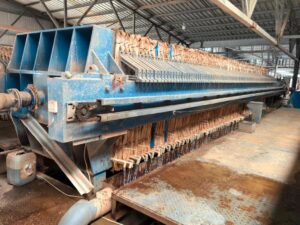
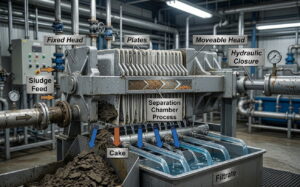
It takes a messy mixture of liquids and solids (called slurry) and separates them under pressure. You get clean liquid on one side and dry “filter cake” on the other.
Think of it like a super-powered coffee filter on steroids.
But here’s the thing:
This simple process saves companies millions in waste disposal costs. Instead of dealing with heavy, wet sludge, they get compact, dry solids that are easier (and cheaper) to handle.
What Is a Filter Press Used For?
The typical uses of filter press include municipal and industrial wastewater dewatering (sludge reduction up to ~90%), mining tailings management (water recovery up to ~97%), chemical process separations, and food and beverage clarification.
Wastewater Treatment: The Heavy Lifter
Municipal and industrial wastewater plants use filter presses daily.
Why? Because they reduce sludge volume by up to 90%.
I’ve seen facilities cut their disposal costs from $50,000 per month to $5,000 just by switching to filter press dewatering.
Common wastewater applications:
- Municipal sewage treatment
- Industrial effluent processing
- Stormwater management
- Leachate treatment
Mining and Mineral Processing
Mining operations generate massive amounts of slurry. Filter presses help them:
- Recover valuable minerals from tailings
- Reduce water consumption (critical in dry regions)
- Meet environmental regulations
- Lower transportation costs
One copper mine I consulted with saved $2.3 million annually by implementing filter press technology for their tailings management.
Chemical Manufacturing
Chemical plants need precise separation. Filter presses deliver by:
- Separating reaction products
- Recovering catalysts
- Processing pigments and dyes
- Handling hazardous materials safely
Pro Tip: High-pressure filter presses (up to 30 bar) work especially well for fine chemical particles.
Food and Beverage Industry
This might surprise you:
Filter presses are huge in food production.
Key applications include:
- Edible oil clarification
- Wine and beer filtration
- Sugar processing
- Fruit juice production
- Dairy waste management
The best part? They meet strict FDA requirements while improving product quality.
How Filter Presses Create Value
Cost Reduction Champions
Here’s what makes filter presses so valuable:
- Lower disposal costs – Dry cake costs 70-80% less to dispose than wet sludge
- Water recovery – Reclaim 95%+ of process water
- Reduced labor – Automated systems need minimal oversight
- Energy efficiency – Uses 1/6 the energy of belt presses or centrifuges
Environmental Benefits That Matter
Environmental compliance isn’t optional anymore.
Filter presses help by:
- Minimizing landfill waste
- Enabling material recycling
- Reducing water consumption
- Meeting discharge regulations
I’ve seen companies avoid six-figure EPA fines by upgrading their separation technology.
Technical Applications and Specialized Uses
Membrane Filter Presses for Extra-Dry Cake
Some applications need ultra-low moisture content.
Membrane presses use inflatable diaphragms to squeeze out that last bit of water. Perfect for:
- Pharmaceutical waste
- Hazardous materials
- High-value mineral recovery
Automatic vs Manual Systems
Manual presses work great for:
- Small batch operations
- Variable materials
- Budget-conscious facilities
Automatic presses excel at:
- 24/7 operation
- Consistent quality
- High-volume processing
- Harsh environments
Specialized Industrial Uses
Power Generation:
- Fly ash dewatering
- Scrubber sludge processing
- Cooling tower blowdown
Steel Mills:
- Blast furnace dust
- Rolling mill scale
- Pickling liquor treatment
Aggregate Processing:
- Sand washing fines
- Concrete washout
- Quarry water treatment
Real-World Performance Metrics
Let me share some actual results:
Municipal Wastewater Plant (10 MGD):
- Sludge volume reduced: 85%
- Annual savings: $1.2 million
- ROI period: 18 months
Mining Operation (Gold):
- Water recovery: 97%
- Cake moisture: 18% (from 65% in thickener)
- Processing rate: 200 tons/hour
Food Processing (Brewery):
- Yeast recovery: 95%
- Water reuse rate: 90%
- Disposal cost reduction: 75%
Choosing the Right Filter Press Application
Size Matters
Filter presses range from tiny lab units (150mm plates) to massive industrial systems (2000mm plates).
Match your size to:
- Daily throughput requirements
- Available floor space
- Future expansion plans
Material Compatibility
Different slurries need different approaches:
Abrasive materials → Rubber-lined plates
Corrosive chemicals → Stainless steel or plastic construction
High temperature → Special gaskets and cloths
Fine particles → Tight-weave filter media
Pressure Requirements
Standard pressure (7-15 bar) handles most applications.
But consider high-pressure systems for:
- Fine particle capture
- Maximum dewatering
- Difficult-to-filter materials
Integration With Other Systems
Filter presses rarely work alone.
Common system partners:
Clarifiers First, Filter Press Second
For low-solids slurries (under 5%), use a clarifier to pre-concentrate.
This combo can achieve:
- 95% water recovery
- Minimal chemical usage
- Optimal cycle times
Chemical Conditioning
The right chemistry makes all the difference:
- Flocculants create larger particles
- Coagulants improve capture rates
- pH adjustment enhances separation
I’ve seen proper conditioning cut cycle times in half.
Future Applications and Emerging Uses
The filter press market keeps evolving.
Emerging applications include:
- Lithium battery recycling
- Bioplastic production
- Data center cooling water
- Pharmaceutical waste streams
- Microplastic removal
These new uses drive innovation in materials, automation, and efficiency.
Making the Business Case
Here’s how to justify a filter press investment:
Calculate your current costs:
- Sludge disposal fees
- Transportation expenses
- Labor requirements
- Regulatory compliance
Compare to filter press operation:
- Equipment cost (one-time)
- Operating expenses (ongoing)
- Maintenance requirements
- Expected lifespan (typically 20+ years)
Most facilities see payback in 12-24 months.
Common Misconceptions Debunked
“Filter presses are old technology”
Modern systems feature:
- PLC automation
- Remote monitoring
- Predictive maintenance
- IoT integration
“They require constant attention”
Automatic systems run unattended for hours. Some facilities operate with just one operator per shift.
“Maintenance is expensive”
Routine maintenance involves:
- Cloth replacement (1-2 years)
- Hydraulic fluid changes
- Gasket inspection
Total annual maintenance typically costs 3-5% of equipment value.
The Bottom Line on Filter Press Applications
Filter presses solve real problems across dozens of industries.
They turn waste streams into manageable materials. They recover valuable resources. They help companies meet environmental regulations while cutting costs.
Whether you’re dealing with wastewater, mining tailings, or food processing waste, there’s likely a filter press configuration that fits your needs.
The key? Understanding your specific application requirements and matching them to the right technology.
Remember: What is a filter press used for ultimately depends on your industry and goals – but the core benefit remains the same: efficient, cost-effective separation that turns problems into solutions.




 English
  German
  Spanish
  French
  Italian
  Russian
  Turkish
  Dutch
Dutch  Polish