
The industrial waste water treatment process is more complex than most people realize.
In fact, I was shocked when I learned that industrial facilities generate over 22 billion gallons of wastewater every single day.
And here’s the thing:
Without proper treatment, this wastewater can destroy entire ecosystems, contaminate drinking water supplies, and rack up millions in regulatory fines.
That’s exactly why understanding industrial wastewater treatment isn’t just important—it’s critical for any business that produces wastewater as a byproduct.
In this guide, as a professional water treatment supplier, I’ll break down everything you need to know about treating industrial wastewater in 2025.
Let’s dive in.

What Is Industrial Wastewater Treatment (And Why Should You Care)?
Industrial wastewater treatment is the process of removing contaminants from water that’s been used in manufacturing, processing, or other industrial operations.
Think of it like this:
Your facility takes in clean water. You use it in your processes. And now that water is loaded with chemicals, metals, oils, and other nasty stuff.
You can’t just dump it. That’s illegal (and incredibly harmful).
So you need to treat it.
But here’s what makes industrial wastewater different from regular sewage:
- Higher pollutant concentrations: We’re talking heavy metals, toxic chemicals, and industrial-strength organic compounds
- Variable composition: Your wastewater changes based on production schedules and processes
- Stricter regulations: The EPA doesn’t mess around with industrial discharge limits
The bottom line?
If you’re producing industrial wastewater, you need a treatment system that can handle whatever your processes throw at it.
Industrial Waste Water Treatment Process: Core Stages
Most industrial wastewater goes through three main treatment stages.
(Sometimes four, if you count pre-treatment.)
Here’s how it breaks down:
Stage 1: Preliminary Treatment
This is where you remove the big stuff.
I’m talking about:
- Large debris
- Grit and sand
- Floating oils and grease
The goal here is simple: protect your downstream equipment from damage.
Most facilities use:
- Bar screens to catch large objects
- Grit chambers to settle out heavy particles
- Oil/water separators to skim off floating hydrocarbons
Pro tip: Don’t skimp on preliminary treatment. I’ve seen pumps destroyed by debris that should’ve been caught at this stage.
Stage 2: Primary Treatment
Now we’re getting into the real work.
Primary treatment focuses on removing suspended solids and organic matter through physical and chemical processes.
Here’s what typically happens:
pH Adjustment
First, you neutralize the wastewater pH (usually targeting 6-9). This protects your biological treatment systems downstream and helps with chemical precipitation.
Coagulation and Flocculation
Next, you add chemicals to make tiny particles clump together. The coagulants neutralize particle charges, then flocculants help form larger “flocs” that are easier to remove.
Sedimentation
Finally, the water flows into a clarifier where those flocs settle to the bottom as sludge.
The result? You’ve removed 50-70% of suspended solids and 25-40% of BOD.
Not bad, but we’re not done yet.
Stage 3: Secondary (Biological) Treatment
This is where things get interesting.
Secondary treatment uses microorganisms to eat up dissolved organic matter. It’s basically harnessing nature to clean your water.
The most common method? Activated sludge.
Here’s how it works:
- Wastewater enters an aeration tank
- Air gets pumped in to keep oxygen levels high
- Bacteria consume the organic pollutants
- The mixture flows to a secondary clarifier
- Clean water flows out the top, bacterial sludge settles to the bottom
But activated sludge isn’t your only option.
Other biological treatment methods include:
- Trickling filters (water trickles over media covered in bacteria)
- Rotating biological contactors (rotating disks with bacterial films)
- Membrane bioreactors (combining biological treatment with membrane filtration)
Each has its pros and cons. MBRs, for example, produce incredibly clean effluent but cost more upfront.
Stage 4: Tertiary/Advanced Treatment
Sometimes secondary treatment isn’t enough.
Maybe you’re discharging to a sensitive water body. Or maybe you want to reuse the water in your processes.
That’s where tertiary treatment comes in.
Common tertiary treatment processes include:
- Filtration (sand, multimedia, or membrane)
- Nutrient removal (for nitrogen and phosphorus)
- Disinfection (UV, chlorine, or ozone)
- Advanced oxidation (for stubborn organics)
The specific methods depend on your discharge requirements and water quality goals.
Dealing with Specific Industrial Contaminants
Here’s the thing about industrial wastewater:
Every industry has its own contamination challenges.
Let me break down some of the toughest ones:
Heavy Metals Removal
Heavy metals are a huge problem because they’re toxic and don’t break down naturally.
The go-to method? Chemical precipitation.
You adjust the pH (usually with lime or caustic) to convert dissolved metals into solid hydroxides. Then you settle them out in a clarifier.
But here’s the catch:
Different metals precipitate at different pH levels. Chrome needs pH 8.5. Iron prefers pH 3. Nickel wants pH 10.
So if you’ve got multiple metals? You might need a multi-stage precipitation process.
Another option is sulfide precipitation, which works at lower pH levels and creates more stable precipitates. The downside? It’s trickier to control and can create odor issues.
Oil and Grease Management
O&G can foul your equipment and create serious discharge violations.
For free-floating oil, gravity separation works great. API separators and parallel plate interceptors let oil float to the surface for skimming.
But emulsified oil? That’s tougher.
You’ll need chemical treatment to break the emulsion, followed by dissolved air flotation (DAF) to remove the tiny oil droplets.
Biological Contaminants
Industries like food processing and pharmaceuticals often have high BOD loads from organic waste.
The solution? Beef up your biological treatment.
You might need:
- Extended aeration times
- Higher biomass concentrations
- Supplemental nutrients (nitrogen and phosphorus)
- Multi-stage biological systems
The key is maintaining the right conditions for your bacteria to thrive.
Modern Treatment Technologies That Actually Work
The wastewater treatment industry has come a long way.
Here are the technologies making the biggest impact in 2025:
Membrane Bioreactors (MBRs)
MBRs combine biological treatment with membrane filtration.
The result? Crystal-clear effluent that often meets reuse standards.
Benefits:
- Smaller footprint (up to 50% less space)
- Higher quality effluent
- Better handling of variable loads
Drawbacks:
- Higher energy costs
- Membrane replacement every 5-10 years
- More complex operation
Moving Bed Biofilm Reactors (MBBRs)
MBBRs use small plastic carriers that move around the treatment tank. Bacteria grow on these carriers and treat the wastewater as it flows through.
What I love about MBBRs:
- No sludge recycle needed
- Easy to retrofit existing systems
- Handles shock loads well
Advanced Oxidation Processes (AOPs)
For those stubborn compounds that biological treatment can’t touch, AOPs are your answer.
They use combinations of:
- UV light
- Hydrogen peroxide
- Ozone
- Catalysts
To create hydroxyl radicals that destroy organic contaminants.
Yes, they’re expensive. But sometimes they’re the only option for certain pollutants.
Making Your Treatment System Actually Efficient
Here’s what separates good treatment systems from great ones:
Process Control and Automation
Modern control systems can:
- Adjust chemical dosing in real-time
- Optimize aeration based on oxygen demand
- Balance flows between treatment trains
- Alert operators to problems before they become disasters
The investment pays for itself through reduced chemical costs and better compliance.
Regular Monitoring
You can’t manage what you don’t measure.
Key parameters to track:
- Flow rates
- pH and temperature
- Dissolved oxygen
- TSS and turbidity
- BOD/COD
- Specific pollutants
Set up a monitoring schedule and stick to it.
Operator Training
I can’t stress this enough:
The best treatment system in the world will fail with untrained operators.
Invest in:
- Initial certification training
- Regular refresher courses
- Cross-training between shifts
- Emergency response drills
Your operators are your first line of defense against permit violations.
Sludge Management: The Part Nobody Talks About
Every treatment process generates sludge.
And that sludge needs somewhere to go.
Your options:
- Landfilling (expensive and increasingly restricted)
- Land application (if it meets quality standards)
- Incineration (high energy costs)
- Beneficial reuse (composting, soil amendment)
The key is sludge minimization through:
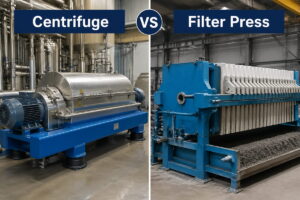
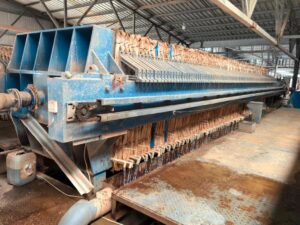
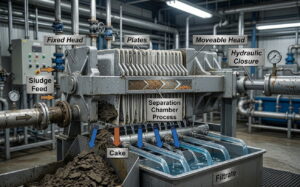
- Proper dewatering (belt presses, centrifuges, filter presses)
- Digestion (aerobic or anaerobic)
- Chemical conditioning
Remember: sludge disposal can be 50% of your treatment costs. Don’t ignore it.
The Business Case for Better Treatment
Let me be blunt:
Good wastewater treatment isn’t cheap.
But bad wastewater treatment is expensive.
Consider:
- Regulatory fines: Can reach $37,500 per day per violation
- Lawsuits: Environmental damage claims in the millions
- Reputation damage: Try explaining a fish kill to your shareholders
- Lost production: When regulators shut you down
Plus, there’s the flip side:
Many facilities are turning wastewater into a resource through:
- Water reuse (reducing freshwater costs)
- Energy recovery (from anaerobic digestion)
- Resource recovery (metals, nutrients)
The ROI on proper treatment? It’s not just positive—it’s essential for long-term operation.
Common Treatment Mistakes (And How to Avoid Them)
I’ve seen these mistakes dozens of times:
Undersizing Equipment
“We’ll never exceed design capacity” …until you do. Build in at least 25% safety factor.
Ignoring Pretreatment
Trying to remove everything in one step doesn’t work. Each stage has its job.
Poor Chemical Management
Overfeeding chemicals wastes money. Underfeeding means non-compliance. Get your dosing right.
Neglecting Maintenance
That pump will fail. Those membranes will foul. Have a maintenance schedule and spare parts inventory.
Inadequate Monitoring
By the time you see the problem in your effluent, it’s too late. Monitor throughout the process.
Future-Proofing Your Treatment System
The regulatory landscape keeps tightening.
Here’s how to stay ahead:
- Design for flexibility: Modular systems that can adapt to new requirements
- Leave room for expansion: You’ll probably need it
- Consider emerging contaminants: PFAS, pharmaceuticals, microplastics
- Invest in data: Better monitoring and control systems
- Plan for water reuse: It’s not if, but when
The Bottom Line
The industrial waste water treatment process isn’t just about meeting regulations.
It’s about protecting our water resources, maintaining your license to operate, and increasingly, finding value in what was once waste.
The technologies exist. The know-how is available.
What matters now is execution.
Start with understanding your wastewater characteristics. Design a system that matches your needs (with room to grow). Operate it properly. And never stop optimizing.
Because at the end of the day, effective wastewater treatment isn’t just good compliance—it’s good business.
Get it right, and you’ll protect both the environment and your bottom line.
That’s the real power of a well-designed industrial waste water treatment process.




 English
  German
  Spanish
  French
  Italian
  Russian
  Turkish
  Dutch
Dutch  Polish