
Ever wondered how murky, particle-filled water becomes crystal clear?
The answer lies in the coagulation process in water treatment – a chemical treatment method that’s been keeping our drinking water safe for over a century.
Here’s the thing:
Without coagulation, removing tiny suspended particles from water would be nearly impossible. These particles are so small they’d take centuries to settle naturally.
In this guide, as a professional water treatment supplier, I’ll show you exactly how coagulation works, which chemicals work best, and how to optimize the process for maximum efficiency.
Let’s dive in.

What Is Coagulation in Water Treatment?
Coagulation is a chemical water treatment process that neutralizes the electrical charges of suspended particles in water.
Why is this important?
Most particles in water carry a negative charge. This causes them to repel each other like magnets with the same poles.
The result? They stay suspended indefinitely.
Coagulation fixes this problem by adding positively charged chemicals (coagulants) to the water. These chemicals neutralize the negative charges, allowing particles to clump together into larger masses called flocs.
Think of it like this:
Imagine trying to pick up individual grains of sand with chopsticks. Pretty much impossible, right?
But if you could make those grains stick together into marble-sized balls? Now you’re talking.
That’s exactly what coagulation does for water treatment.
The Science Behind Particle Destabilization
Here’s where things get interesting.
Suspended particles in water are stabilized by something called the “electrical double layer.” This creates what’s known as zeta potential – basically, the strength of the electrical charge around each particle.
The higher the zeta potential, the more stable the suspension.
For effective coagulation, you need to reduce that zeta potential to near zero. This is called the “isoelectric point.”
According to research, particles with a zeta potential between -30 to +30 millivolts are unstable and will coagulate. Anything beyond that range? They’ll stay suspended.
But here’s the kicker:
You can’t just dump in coagulant and hope for the best. Too little won’t neutralize the charges. Too much can actually reverse the charge and re-stabilize the particles.
It’s like seasoning food – you need just the right amount.
Types of Coagulants That Actually Work
When it comes to choosing coagulants, you’ve got two main categories: inorganic and organic.
Inorganic Coagulants
These are the workhorses of water treatment. The most common ones include:
Aluminum Sulfate (Alum)
- Most widely used coagulant worldwide
- Works best at pH 6.0-7.4
- Creates aluminum hydroxide flocs
- Cost-effective and readily available
Ferric Chloride
- Works across a wider pH range (4.0-11.0)
- Creates denser flocs than alum
- Better for cold water treatment
- More corrosive to equipment
Ferric Sulfate
- Similar to ferric chloride but less corrosive
- Excellent for removing organic matter
- Works well with high turbidity water
In fact, studies show that ferric coagulants can remove up to 15% more turbidity than aluminum-based ones in certain conditions.
Organic Coagulants
These newer players are gaining traction:
Polyamines
- Work at much lower doses
- Don’t affect pH significantly
- Produce less sludge
PolyDADMACs
- Highly effective for low-turbidity water
- More expensive but worth it for specific applications
Step-by-Step Coagulation Process
Let me break down exactly how this process works in a typical water treatment plant:
Step 1: Coagulant Dosing
First, you add the coagulant to raw water at a specific point called the “rapid mix zone.”
The key here? Precision.
Too much coagulant wastes money and can actually make things worse. Too little won’t get the job done.
Most plants use jar testing to determine optimal doses. This involves testing different coagulant amounts on water samples to find the sweet spot.
Step 2: Rapid Mixing
This is where the magic happens.
You need intense mixing for 30-60 seconds to ensure the coagulant disperses evenly throughout the water.
Think of it like making salad dressing – without proper mixing, you get oil floating on vinegar instead of a smooth emulsion.
The mixing intensity is measured by something called “velocity gradient” (G-value). For rapid mixing, you want a G-value between 700-1000 per second.
Step 3: Slow Mixing (Flocculation)
After rapid mixing, you slow things down.
This gentle stirring (20-40 minutes) allows the neutralized particles to collide and stick together, forming visible flocs.
The G-value here drops to 20-70 per second. Any faster and you’ll break up the forming flocs.
Step 4: Sedimentation
Now those flocs need to settle out.
In a sedimentation basin, water moves slowly (typically 0.5-2 meters per hour), giving flocs time to sink to the bottom.
The settled sludge is removed periodically, while the clarified water moves on to filtration.
Factors That Make or Break Coagulation
Success in coagulation isn’t just about following steps. Several factors can significantly impact your results:
pH Levels
This is huge.
Each coagulant has an optimal pH range. Stray outside it, and effectiveness plummets.
For example:
- Alum works best at pH 6.0-7.4
- Ferric chloride can handle pH 4.0-11.0
- Organic coagulants are less pH-sensitive
Temperature
Cold water is coagulation’s enemy.
Lower temperatures mean:
- Slower chemical reactions
- Higher water viscosity
- Reduced particle collision rates
That’s why many plants switch to ferric coagulants in winter – they perform better in cold conditions.
Mixing Energy
Get this wrong and nothing else matters.
Too little mixing? Coagulant won’t disperse properly.
Too much? You’ll shear the flocs apart.
It’s like whipping cream – there’s a perfect speed for optimal results.
Raw Water Quality
Different water sources require different approaches.
High turbidity water? You might need higher coagulant doses.
Low turbidity? Consider adding clay or recycling sludge to provide more particles for collision.
Real-World Optimization Strategies
Here’s where theory meets practice.
I’ve seen plants cut their coagulant costs by 30% just by implementing these strategies:
Streaming Current Monitoring
This technology measures the charge demand of your water in real-time.
Instead of dosing based on yesterday’s jar test, you adjust continuously based on actual conditions.
One plant in California reduced their alum usage by 25% after installing streaming current detectors.
Zeta Potential Analysis
Remember that electrical charge we talked about?
Modern instruments can measure zeta potential online, giving you instant feedback on coagulation effectiveness.
When zeta potential approaches zero, you know you’ve hit the sweet spot.
Multi-Stage Coagulation
Sometimes one shot isn’t enough.
By adding coagulant at multiple points, you can:
- Target different types of particles
- Reduce overall chemical usage
- Improve removal efficiency
A facility in Texas improved their turbidity removal from 85% to 95% by switching to two-stage coagulation.
Common Mistakes to Avoid
Even experienced operators can fall into these traps:
Over-Relying on Jar Tests
Jar tests are great, but they’re not gospel.
Real-world conditions include:
- Temperature variations
- Flow rate changes
- Mixing intensity differences
Use jar tests as a starting point, then fine-tune based on full-scale results.
Ignoring Alkalinity
Coagulation consumes alkalinity.
If your raw water has low alkalinity, you might need to add lime or soda ash to maintain proper pH during treatment.
I’ve seen plants struggle for months before realizing low alkalinity was sabotaging their coagulation.
Poor Injection Point Selection
Where you add coagulant matters.
Add it too early? It might react with pipe walls.
Too late? Inadequate mixing.
The sweet spot is usually right before your rapid mix chamber.
Advanced Coagulation Techniques
For those ready to level up, consider these advanced approaches:
Enhanced Coagulation
This EPA-approved method targets natural organic matter (NOM) removal.
By optimizing pH and coagulant dose specifically for NOM, you can:
- Reduce disinfection byproduct formation
- Improve finished water quality
- Meet stricter regulations
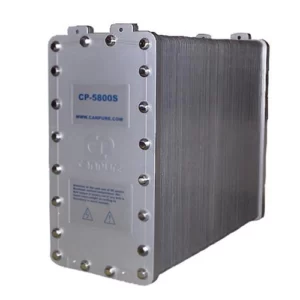
Electrocoagulation
Instead of adding chemicals, you generate coagulants electrically.
Benefits include:
- No chemical storage
- Minimal sludge production
- Better heavy metal removal
The downside? Higher energy costs and electrode replacement.
Natural Coagulants
Moringa seeds, chitosan, and other natural materials are gaining attention.
While not ready for large-scale use, they show promise for:
- Rural applications
- Sustainable treatment
- Reduced chemical dependency
Measuring Success
How do you know if your coagulation process is working?
Track these key metrics:
Turbidity Removal
- Target: >95% reduction
- Measure: Before and after sedimentation
Settled Water Turbidity
- Target: <2 NTU (ideally <1 NTU)
- Critical for effective filtration
Sludge Volume
- Lower is better (indicates efficient coagulation)
- Track trends over time
Chemical Cost per Million Gallons
- Benchmark against similar plants
- Look for optimization opportunities
Integration with Other Treatment Processes
Coagulation doesn’t work in isolation.
It sets the stage for:
Filtration
- Better coagulation = longer filter runs
- Reduced backwash frequency
- Lower filtered water turbidity
Disinfection
- Removing particles protects pathogens from disinfectants
- Reduces chlorine demand
- Improves CT compliance
Sludge Handling
- Coagulant type affects sludge characteristics
- Consider disposal costs when selecting coagulants
Future Trends in Coagulation
The field isn’t standing still. Here’s what’s coming:
AI-Driven Optimization
Machine learning algorithms are starting to predict optimal coagulant doses based on:
- Historical data
- Weather patterns
- Source water trends
Early adopters report 20-40% chemical savings.
Hybrid Coagulants
Combining organic and inorganic coagulants offers:
- Best of both worlds performance
- Reduced sludge production
- Lower overall costs
Real-Time Water Quality Sensors
New sensors can measure:
- Particle size distribution
- Organic matter characteristics
- Multiple parameters simultaneously
This data enables unprecedented process control.
Troubleshooting Guide
When things go wrong (and they will), here’s your checklist:
High Settled Water Turbidity?
- Check coagulant dose
- Verify pH is optimal
- Inspect mixing equipment
- Test for changes in raw water
Floating Floc?
- Usually indicates overdosing
- Can also mean trapped air
- Check detention time
Pin Floc (Tiny Flocs)?
- Insufficient coagulant
- pH out of range
- Poor mixing
No Floc Formation?
- Coagulant might be bad
- Injection system failure
- Extreme pH conditions
Making It All Work Together
Here’s the bottom line:
Successful coagulation requires balancing multiple variables while adapting to changing conditions.
Start with the basics:
- Proper chemical selection
- Optimal pH control
- Effective mixing
Then layer on advanced techniques as you gain experience.
Remember, every water source is different. What works for one plant might not work for another.
The key is understanding the principles, then applying them to your specific situation.
Test, monitor, adjust, repeat.
That’s the path to mastering the coagulation process in water treatment.







 English
  German
  Spanish
  French
  Italian
  Russian
  Turkish
  Dutch
Dutch  Polish