
Here’s the deal:
If you want to understand the hollow fiber membrane manufacturing process, you’re in the right place.
In fact, the process I’m about to show you is the same one used by major manufacturers to produce millions of meters of hollow fiber membranes every year.
And today, as a professional hollow fiber membrane manufacturer, I’m going to break down exactly how these microscopic tubes are made, step by step.
Let’s dive in.
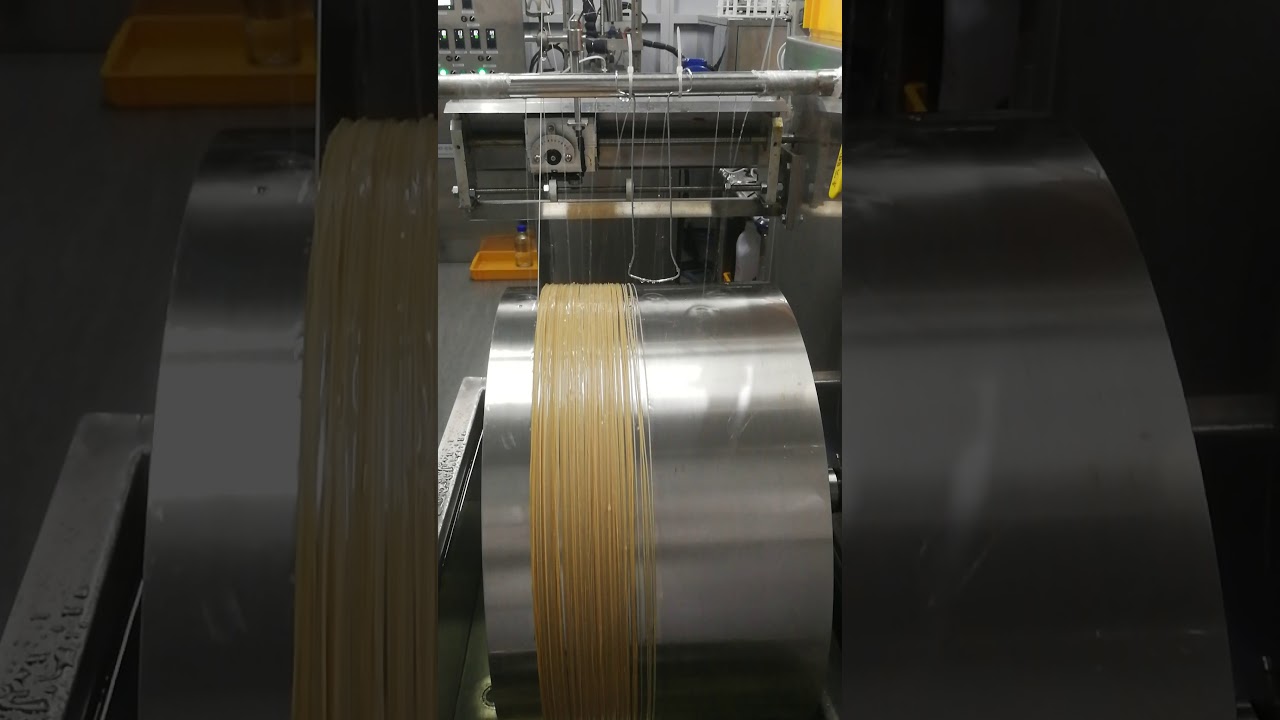
What Are Hollow Fiber Membranes?
First things first:
Hollow fiber membranes are tiny, tube-like structures with porous walls. Think of them as super-thin straws that can filter out specific particles based on size.
These membranes are EVERYWHERE.
From water treatment plants to artificial kidneys, they’re the unsung heroes of modern filtration.
Here’s what makes them special:
- Massive surface area: A single module can pack thousands of fibers
- Self-supporting structure: No need for additional backing materials
- High efficiency: More filtration per square inch than flat membranes
The typical hollow fiber has an outer diameter of less than 500 micrometers. That’s about 5 times thinner than a credit card.
The Three Main Manufacturing Methods
Now here’s where it gets interesting.
There are three primary methods for making hollow fiber membranes:
1. Wet Spinning (The Industry Standard)
Wet spinning dominates the industry. And for good reason.
This method involves extruding a polymer solution (called “dope”) directly into a coagulation bath. The instant the polymer hits the non-solvent, it solidifies into a porous structure.
Think of it like making pasta, but instead of boiling water, you’re using chemicals to instantly solidify the material.
Key advantages:
- Highly porous structure
- Fast production
- Works with most polymers
2. Dry-Jet Wet Spinning (Air Gap Method)
This is wet spinning’s sophisticated cousin.
Instead of dunking the polymer directly into the bath, there’s an air gap between the spinneret and the coagulation bath.
This small gap (usually 0-20 cm) makes a HUGE difference.
Why?
Because it allows some solvent to evaporate, creating a denser outer skin on the fiber. This skin layer is crucial for certain applications like gas separation.
3. Dry Spinning
Dry spinning takes a different approach entirely.
Instead of using a liquid bath, the polymer solution is extruded into heated air. The solvent evaporates, leaving behind a solid fiber.
It’s like blow-drying paint until only the solid coating remains.
But here’s the catch:
Maintaining a hollow structure during dry spinning is TOUGH. That’s why it’s the least common method for hollow fiber production.
Hollow Fiber Membrane Manufacturing Process: Step-by-Step
Let me walk you through exactly how hollow fiber membranes are made using the most common method: dry-jet wet spinning.
Step 1: Prepare the Polymer Solution
Everything starts with the dope solution.
This viscous liquid contains:
- The base polymer (usually polysulfone or polyethersulfone)
- Solvents to dissolve the polymer
- Additives to control pore formation
Getting this mixture right is CRITICAL. Even small variations can dramatically change the final membrane properties.
Step 2: Load the Spinneret
The spinneret is the heart of the operation.
Picture a specialized nozzle with two concentric tubes:
- The outer ring extrudes the polymer solution
- The inner tube delivers the bore fluid
This design creates the hollow structure we need.
Step 3: Extrusion Through Air Gap
Here’s where the magic happens.
The polymer solution exits the spinneret and travels through the air gap. During these milliseconds, several things occur:
- Some solvent evaporates from the outer surface
- The polymer chains start to align
- A thin, dense skin begins forming
The air gap distance is crucial. Too short, and you lose the benefits. Too long, and the fiber can break.
Step 4: Enter the Coagulation Bath
When the nascent fiber hits the water bath, phase inversion kicks in.
This is where the liquid polymer transforms into a solid, porous structure. The solvent rushes out, non-solvent rushes in, and the polymer precipitates.
It happens in seconds.
The bath temperature, typically between room temperature and 70°C, affects pore size and distribution.
Step 5: Washing and Post-Treatment
Fresh out of the coagulation bath, the fibers still contain residual solvents.
Multiple washing baths remove these chemicals. This step is NON-NEGOTIABLE.
Skip it, and you’ll get:
- Poor performance
- No reproducibility
- Potential toxicity issues
Step 6: Drying and Collection
Finally, the clean fibers are:
- Dried to remove water
- Wound onto collection spools
- Stored in controlled conditions
UV light, humidity, and static electricity can all damage the fibers. Proper storage is essential.
Critical Process Parameters
Now let’s talk about what REALLY matters.
These parameters make or break your membrane quality:
Polymer Concentration
Higher concentration = Denser membranes
But there’s a sweet spot. Too high, and the solution becomes too viscous to process. Too low, and the membranes lack mechanical strength.
Most manufacturers use 15-25% polymer concentration.
Air Gap Distance
This single parameter can change everything.
Short air gaps (0-5 cm):
- More open structure
- Higher flux
- Lower selectivity
Long air gaps (10-20 cm):
- Denser skin layer
- Lower flux
- Higher selectivity
Bore Fluid Composition
The bore fluid isn’t just there to keep the fiber hollow.
Its composition affects the inner surface structure. Pure water creates a different pore structure than solvent mixtures.
Take-up Speed
How fast you pull the fiber matters.
Faster speeds create:
- Thinner walls
- More aligned polymer chains
- Different pore structures
Most systems run at 5-20 meters per minute.
Quality Control and Testing
Here’s something most people don’t realize:
Making the fiber is only half the battle. Testing and quality control are equally important.
Pore Size Distribution
Manufacturers use several methods:
- Bubble point testing
- Mercury intrusion porosimetry
- Microscopy analysis
The goal? Consistent pore sizes across the entire production run.
Mechanical Properties
Every batch gets tested for:
- Tensile strength
- Burst pressure
- Elongation at break
These tests ensure the membranes can handle real-world conditions.
Performance Testing
The ultimate test is performance.
Manufacturers measure:
- Water flux
- Rejection rates
- Fouling resistance
Only fibers that meet strict specifications make it to market.
Common Manufacturing Challenges
Let me share the challenges that keep membrane manufacturers up at night.
Defect Formation
Even tiny defects can ruin a membrane’s performance.
Common culprits:
- Air bubbles in the dope
- Particles in the solutions
- Temperature fluctuations
- Vibrations during spinning
The solution? Rigorous process control and clean room conditions.
Batch-to-Batch Consistency
Getting one good membrane is easy. Getting thousands of identical membranes? That’s the real challenge.
Manufacturers obsess over:
- Raw material quality
- Process parameter control
- Environmental conditions
- Equipment maintenance
Scale-Up Issues
What works in the lab doesn’t always work in production.
Scale-up challenges include:
- Maintaining uniform conditions across multiple spinnerets
- Managing larger solution volumes
- Ensuring consistent coagulation conditions
- Handling increased production speeds
The Future of Membrane Manufacturing
The industry isn’t standing still.
Here’s what’s coming:
Advanced Materials
Beyond traditional polymers, manufacturers are exploring:
- Mixed matrix membranes
- Graphene oxide composites
- Bio-based polymers
Process Innovations
New techniques on the horizon:
- Electrospinning for nanofiber membranes
- 3D printing of membrane structures
- Continuous online monitoring
Sustainability Focus
The push for greener manufacturing includes:
- Solvent recycling systems
- Bio-based polymer sources
- Energy-efficient processes
The Bottom Line
The hollow fiber membrane manufacturing process might seem complex, but it boils down to controlled phase inversion.
Get your polymer solution right, control your process parameters, and maintain quality standards. Do these three things, and you’ll produce membranes that can tackle everything from water purification to gas separation.
The key is understanding that every parameter affects the final product. Temperature, concentration, speed – they all matter.
Master these fundamentals, and you’ll be well on your way to producing high-quality hollow fiber membranes.




 English
  German
  Spanish
  French
  Italian
  Russian
  Turkish
  Dutch
Dutch  Polish