
Краткое резюме
Фильтр-прессы достигают 40-80% твердых частиц в кеке за счет фильтрации под давлением периодического действия, но требуют ручного управления и 2-4 операторов в смену. Центрифуги обеспечивают непрерывную обработку при 20-60% твердых частиц с одним оператором, но стоят в 2-3 раза дороже изначально и потребляют 15-45 кВт-ч/м³ против 8-25 кВт-ч/м³.
Выбирайте фильтр-пресс, если стоимость утилизации превышает $50/тонна и важна максимальная сухость; выбирайте центрифугу для круглосуточной работы свыше 30 м³/час, где обязательна автоматизация.
Вы когда-нибудь стояли перед двумя промышленными обезвоживающими машинами и думали, какая из них не разорит ваш бюджет и действительно выполнит работу?
Я там был.
Сайт центрифуга против фильтр-пресса На перерабатывающих предприятиях уже несколько десятилетий не утихают споры. И не зря: неправильный выбор может стоить вам тысяч потраченной впустую энергии, головной боли при обслуживании и некачественных результатов.
Обе машины отделяют твердые частицы от жидкостей. Но делают они это совершенно разными способами. И эти различия? Они имеют большее значение, чем вы могли бы подумать.
В этом руководстве вы, как профессионал производитель фильтр-прессов, Я расскажу, когда именно следует использовать каждую технологию, основываясь на реальных данных о производительности и реальных примерах из практики.
Звучит неплохо? Давайте погрузимся.
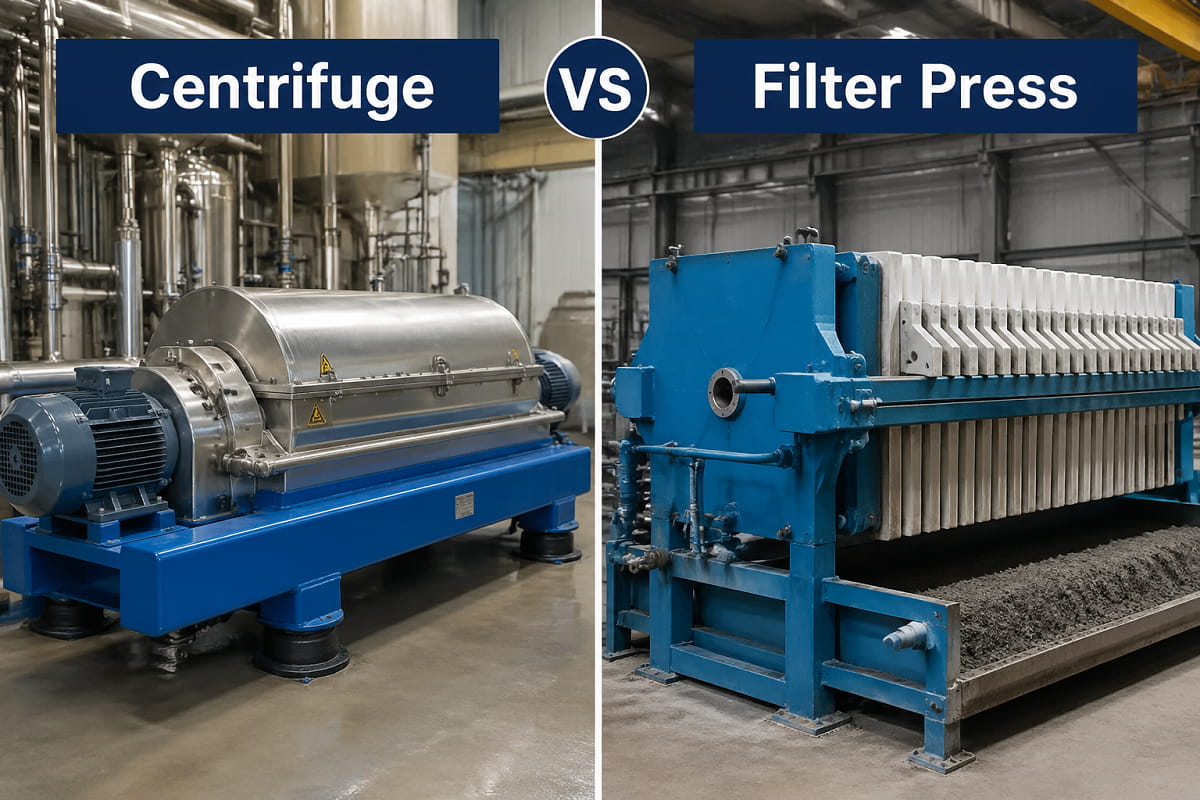
В чем реальная разница между этими машинами?
Подумайте об этом так:
Фильтр-пресс - это как сжимать губку в гидравлических тисках. Сырая сила, прямое давление, сухие до костей результаты.
Центрифуга? Это больше похоже на то, как если бы вы поместили губку в стиральную машину на 3000 оборотов в минуту. Быстро, непрерывно, но, возможно, не так сухо.
Вот что на самом деле происходит внутри каждой машины:
Фильтр-пресс: Чемпион по давлению
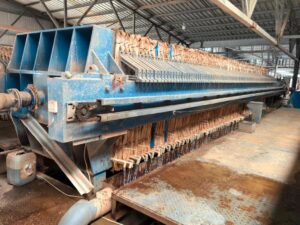
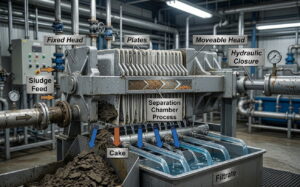
Фильтр-пресс использует механическое давление для продавливания жидкости через фильтровальные ткани.
Процесс:
- Шламовые насосы подаются в камеры между фильтровальными плитами
- Наращивание гидравлического давления (обычно 100-435 фунтов на кв. дюйм)
- Жидкость проникает сквозь ткань
- Твердые частицы спрессовываются в плотные “лепешки”.”
- Пластины открываются, пирожные выпадают
Это порционный процесс. Наполнение, выдавливание, слив, повтор.
Центрифуга: Демон скорости
Декантерная центрифуга вращает вашу суспензию с безумной скоростью, создавая искусственную гравитацию.
Вот как:
- Шлам непрерывно подается во вращающуюся чашу
- Сила G (2 000-4 000-кратное увеличение силы тяжести) прижимает твердые частицы к стенкам чаши
- Внутренний шнековый конвейер продвигает твердые частицы к разгрузке
- Осветленная жидкость переливается в противоположный конец
- Оба потока вытекают непрерывно
Никаких остановок. Никаких партий. Только постоянное разделение.
Центрифуга против фильтр-пресса: Подробное сравнение
Performance Showdown: По цифрам
Позвольте мне показать вам, как эти машины ДЕЙСТВИТЕЛЬНО работают в реальных условиях:
Сухость торта (Большая)
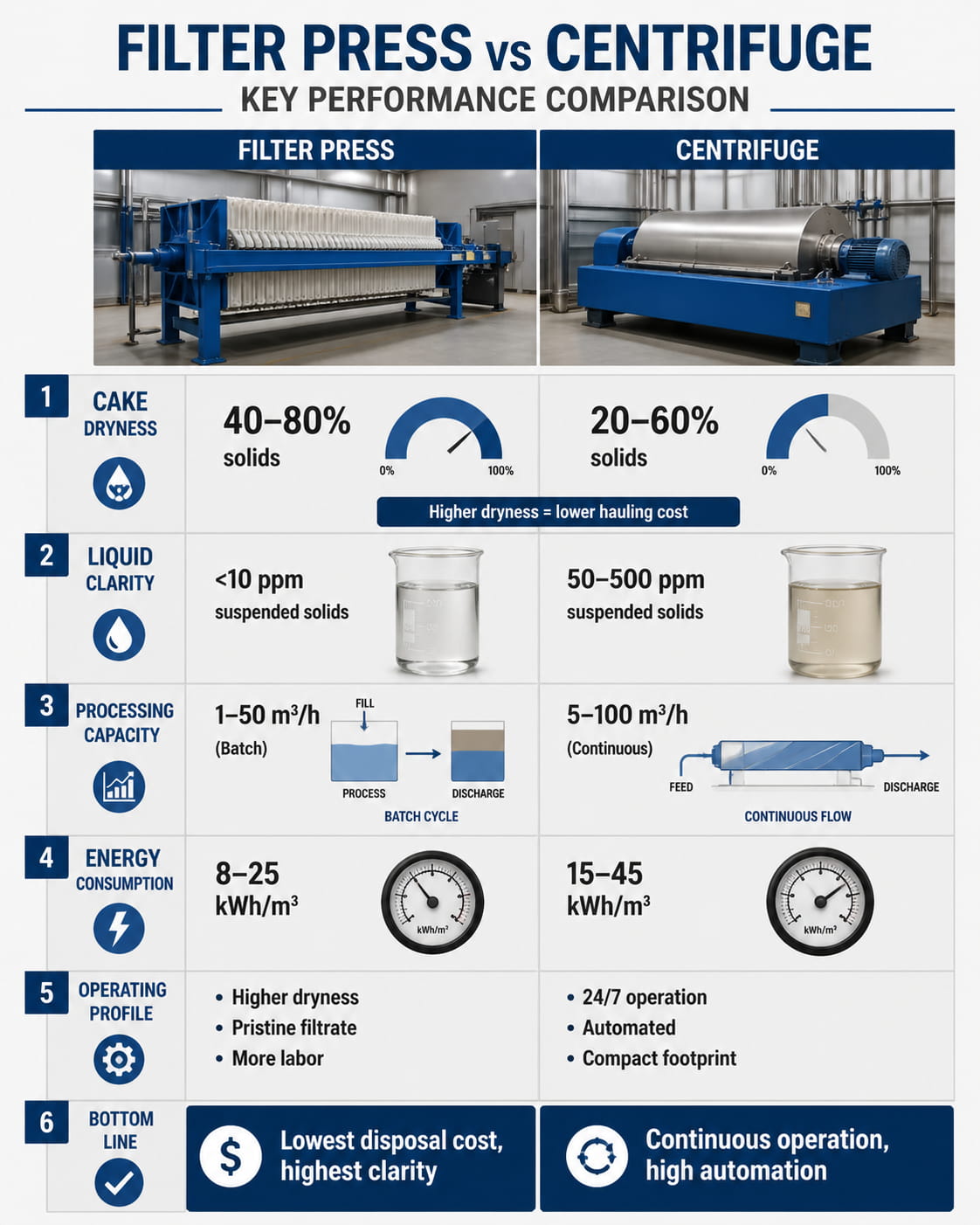
Фильтр-пресс: 40-80% содержание твердых частиц
Центрифуга: 20-60% содержание твердых частиц
Перевод? Фильтр-пресс может производить настолько сухие коржи, что они рассыпаются в руках. Жмыхи из центрифуги? Зачастую они больше похожи на густую зубную пасту.
Почему это важно?
Допустим, вы утилизируете 100 тонн сухих твердых веществ в месяц. При использовании фильтр-пресса, достигающего сухости 60%, вы перевозите 167 тонн. Центрифуга с сухостью 30%? Вы перевозите 333 тонны.
Это в два раза больше, чем расходы на перевозку.
Жидкая ясность
Фильтр-пресс: Кристально чистый фильтрат (часто <10 ppm взвешенных твердых частиц)
Центрифуга: Хорошая прозрачность (50-500 ppm взвешенных твердых частиц)
Фильтровальные ткани действуют как абсолютный барьер. Если частица больше размера пор, она не пройдет. Точка.
Центрифуги полагаются на разницу в плотности. Мелкие частицы или частицы с плотностью, близкой к плотности жидкости? Они могут проскочить.
Мощность обработки
Фильтр-пресс: 1-50 м³/час (партия ограничена)
Центрифуга: 5-100 м³/час (непрерывно)
Но вот в чем дело:
Сырые цифры пропускной способности не дают полного представления о ситуации. Центрифуга работает 24 часа в сутки 7 дней в неделю. Фильтр-прессу требуется время простоя между партиями для выгрузки кека и очистки ткани.
Проверка реальности затрат
Я проанализировал десятки инсталляций. Вот как выглядят цифры на самом деле:
Первоначальные инвестиции
Малая система (10 м³/час)
- Фильтр-пресс: $50,000-150,000
- Centrifuge: $150,000-300,000
Большая система (50+ м³/час)
- Фильтр-пресс: $200,000-500,000
- Centrifuge: $400,000-1,000,000
Но подождите. В этой истории есть еще кое-что...
Эксплуатационные расходы (Скрытая правда)
Вот тут-то все и становится интересным.
Потребление энергии
- Фильтр-пресс: 8-25 кВт-ч/м³
- Центрифуга: 15-45 кВт-ч/м³
Мощный двигатель центрифуги работает непрерывно. Это быстро увеличивает расход топлива.
Трудовые требования
- Фильтр-пресс: 2-4 оператора в смену (ручная разгрузка)
- Центрифуга: 1 оператор для нескольких устройств
Расходные материалы
- Фильтр-пресс: Новые салфетки каждые 500-2 000 циклов
- Центрифуга: Полимер часто требуется добавление ($$$)
Совет профессионала: Для эффективной работы центрифуг многим предприятиям требуется полимер (флокулянт). Это может добавить $50-200 на тонну перерабатываемого сухого вещества.
Применение в реальном мире
Я видел, как обе технологии добивались успеха и терпели поразительные неудачи. Вот когда каждая из них имеет смысл:
Выберите фильтр-пресс, когда:
1. Сухость торта - это король
Горнодобывающие предприятия любят фильтр-прессы. Почему? Отгрузка медного концентрата влажностью 10% вместо 25% экономит огромные транспортные расходы.
2. Вам нужен чистый фильтрат
На химических предприятиях часто требуется чистота фильтрата, которую может обеспечить только фильтр-пресс. Никаких штрафов. Никаких загрязнений.
3. Ваши объемы управляемы
Переработка 20 м³/час в 8-часовую смену? Фильтр-пресс справится с этим, не покладая рук.
4. У вас есть свободная рабочая сила
У вас есть бригада, которой нужна работа? Работа на фильтр-прессе обеспечивает стабильную занятость.
Выбирайте центрифугу, когда:
1. Вы работаете 24 часа в сутки 7 дней в неделю
Городские очистные сооружения не могут остановиться. Центрифуга идеально подходит для их непрерывного потока.
2. Автоматизация обязательна
Морские нефтяные платформы нуждаются в оборудовании, которое работает само по себе. Центрифуги справляются с этой задачей.
3. Места мало
Центрифуга производительностью 50 м³/час помещается в транспортный контейнер. Аналогичный фильтр-пресс? Подумайте о складе.
4. Характеристики материала благоприятствуют этому
Маслянистые шламы, буровые растворы и мелкие биологические твердые частицы часто лучше отделяются в центрифуге.
Реальность обслуживания
Никто не говорит об этом в достаточной мере. Но техническое обслуживание может сделать или сломать ваш ROI.
Обслуживание фильтр-пресса
Хорошее:
- Простые механические системы
- Большинство ремонтных работ можно выполнить с помощью основных инструментов
- Запчасти легко доступны
Плохое:
- Замена ткани - это грязно и трудоемко
- Механизмы смещения пластин изнашиваются
- Ручная очистка между партиями
Типичное годовое обслуживание: 3-5% от капитальных затрат
Обслуживание центрифуги
Хорошее:
- Самоочищающаяся конструкция
- Автоматизированная работа снижает износ
- Более длительные интервалы между капитальным обслуживанием
Плохое:
- Требуются специализированные техники
- Высокоскоростные подшипники = дорогостоящая замена
- Стоимость восстановления свитка может достигать $50,000+
Типичное годовое обслуживание: 5-8% от капитальных затрат
Соображения по охране окружающей среды и безопасности
Давайте поговорим о том, что на самом деле происходит на вашем заводе:
Фильтр-пресс:
- Открытое отверстие = потенциальная утечка
- Ручное обращение с фильтровальной крошкой
- При стирке тканей образуются сточные воды
- Низкое энергопотребление = меньший углеродный след
Центрифуга:
- Работа в закрытом помещении
- Отсутствие ручной обработки тортов
- Повышенное энергопотребление
- Непрерывное использование полимеров (если требуется)
Итог? Центрифуги чище, но требуют много энергии. Фильтр-прессы экономят электроэнергию, но требуют более тщательного ухода.
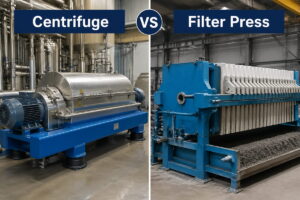
Инфографика "Центрифуга против фильтр-пресса
Продвинутые стратегии выбора
Вот как принимают решения профессионалы:
Подсчитайте цифры (правильно)
Не просто сравнивайте закупочные цены. Рассчитайте:
- 10-летняя совокупная стоимость владения
- Стоимость переработки одной сухой тонны
- Разница в стоимости выбытия
- Стоимость восстановленной воды
Проверьте свой фактический материал
Лабораторные испытания лгут. Пилотные испытания говорят правду.
Аренда пилотного оборудования. Запустите ВАШ раствор. Измерьте:
- Фактическая достигнутая сухость жмыха
- Требования к полимерам
- Время цикла (фильтр-пресс)
- Интенсивность износа (центрифуга)
Рассмотрите гибридные подходы
Некоторые растения используют и то, и другое. Пример:
- Центрифуга для первичного обезвоживания (уменьшение объема сыпучих материалов)
- Фильтр-пресс для окончательной полировки (максимальная сухость)
Это позволяет использовать непрерывную работу центрифуг и превосходное обезвоживание фильтр-прессов.
Принятие окончательного решения
Проанализировав сотни инсталляций, я пришел к следующему выводу:
Выберите фильтр-пресс, если:
- Стоимость утилизации > $50/тонна
- Требуемое содержание твердых частиц в кеке > 35%
- Пакетная обработка подходит для вашей работы
- Качество фильтрата имеет значение
- Затраты на оплату труда < $25/час
- Капитальный бюджет ограничен
Выберите центрифугу, если:
- Выполнение непрерывных операций
- Существуют пространственные ограничения
- Затраты на оплату труда > $40/час
- Производительность > 30 м³/час
- Материал имеет однородные, мелкие частицы
- Автоматизация обязательна
Будущее обезвоживания
Технологии не стоят на месте. Вот что нас ждет:
Умные фильтр-прессы:
- Контроль давления с помощью IoT
- Автоматическая стирка тканей
- Предупреждения о необходимости профилактического обслуживания
- Возможности дистанционного управления
Центрифуги нового поколения:
- Оптимизация переменной скорости
- Системы управления на основе искусственного интеллекта
- Износостойкие керамические компоненты
- Системы рекуперации энергии
Но вот в чем дело: фундаментальная физика не изменится. Давление сжимает лучше. Скорость обрабатывает быстрее.
Ваш план действий
- Определите свою главную цель: Максимальная сухость или непрерывная работа?
- Рассчитайте истинные затраты: Включает в себя затраты на оплату труда, энергию, утилизацию и техническое обслуживание
- Протестируйте свой материал: Никогда не доверяйте общим данным о производительности
- Учитывайте свои ограничения: Пространство, наличие рабочей силы, капитальный бюджет
- План на будущее: Где будет находиться ваша компания через 5 лет?
Настоящее дно
Сайт центрифуга против фильтр-пресса Решение не в том, какая технология “лучше”. Речь идет о том, какая из них соответствует вашей специфике работы.
Я видел, как заводы экономили миллионы благодаря правильному выбору. Я также видел, как неправильный выбор искалечил производство.
Если все сделать правильно, вы оптимизируете весь процесс переработки. Ошибетесь - и будете бороться с этим решением каждый день.
Найдите время. Проведите тесты. Сделайте разумный выбор.
Потому что в конечном итоге лучшая система обезвоживания - это та, которая действительно работает для ВАШЕГО применения, а не та, которая работала для кого-то другого.



 Russian
  English
  German
  Spanish
  French
  Italian
  Turkish
  Dutch
Dutch  Polish