
Riepilogo rapido
Le filtropresse raggiungono 40-80% di solidi in torta attraverso la filtrazione a pressione in batch, ma richiedono un funzionamento manuale e 2-4 operatori per turno. Le centrifughe forniscono un trattamento continuo a 20-60% di solidi con un solo operatore, ma costano inizialmente 2-3 volte di più e consumano 15-45 kWh/m³ contro 8-25 kWh/m³.
Scegliete la filtropressa quando i costi di smaltimento superano $50/ton e l'essiccazione massima è importante; scegliete la centrifuga per operazioni 24/7 superiori a 30 m³/ora, dove l'automazione è obbligatoria.
Vi è mai capitato di trovarvi di fronte a due macchine per la disidratazione industriale e di chiedervi quale non vi farà saltare il budget e non porterà a termine il lavoro?
Ci sono stato.
Il centrifuga vs filtropressa Il dibattito sugli impianti di lavorazione infuria da decenni. E per una buona ragione: scegliere quello sbagliato può costare migliaia di euro in sprechi di energia, problemi di manutenzione e risultati inferiori alle aspettative.
Entrambe le macchine separano i solidi dai liquidi. Ma lo fanno in modi completamente diversi. E queste differenze? Sono più importanti di quanto si possa pensare.
In questa guida, come professionista produttore di filtri pressa, In seguito, vi spiegherò esattamente quando utilizzare ciascuna tecnologia, basandomi su dati di performance reali e su casi di studio reali dal campo.
Sembra una buona idea? Immergiamoci.
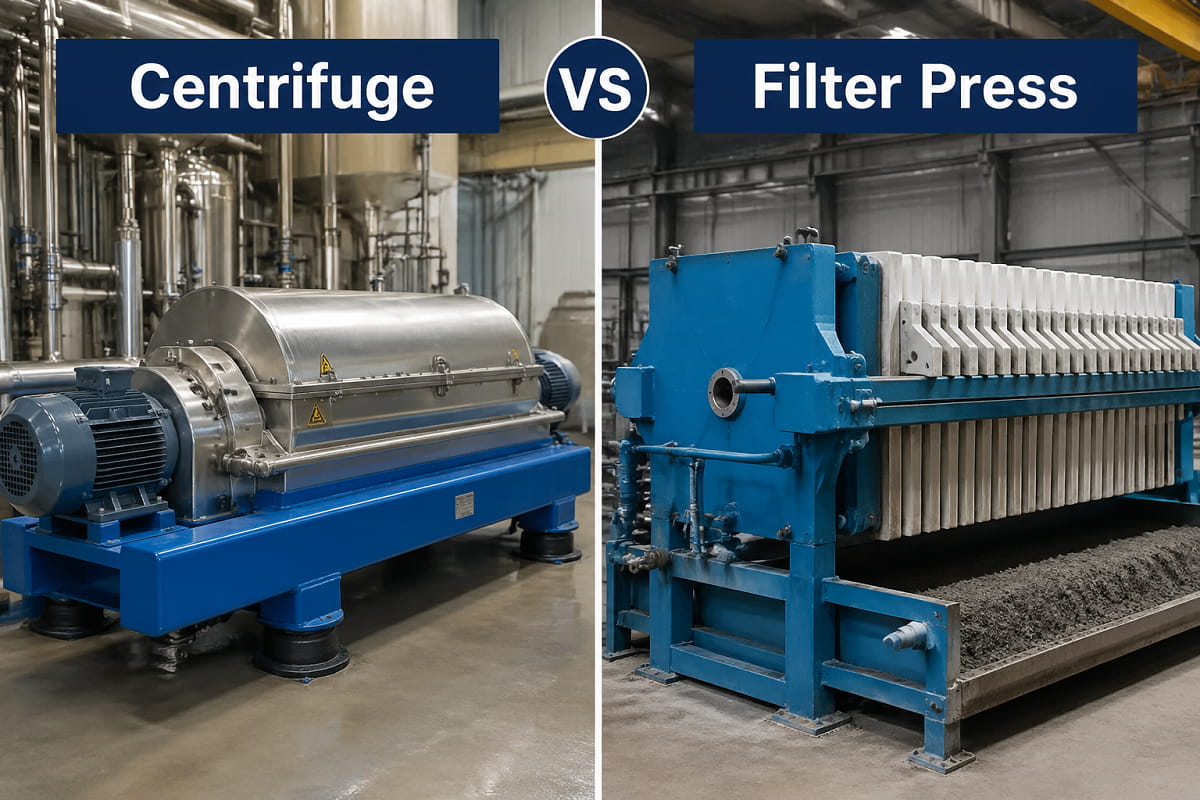
Qual è la vera differenza tra queste macchine?
Vedetela in questo modo:
Una filtropressa è come spremere una spugna con una morsa idraulica. Potenza cruda, pressione diretta, risultati asciutti come l'osso.
Una centrifuga? È come mettere la spugna in una centrifuga di lavatrice a 3.000 giri al minuto. Veloce, continuo, ma forse non altrettanto asciutto.
Ecco cosa succede in realtà all'interno di ogni macchina:
Filtro pressa: Il campione della pressione
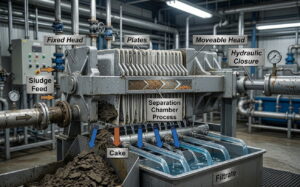
Un filtropressa utilizza pressione meccanica per forzare il liquido attraverso i teli filtranti.
Il processo:
- Pompe per il liquame nelle camere tra le piastre filtranti
- Pressione idraulica (in genere 100-435 psi)
- Il liquido passa attraverso il panno
- I solidi si compattano in “torte” dense”
- I piatti si aprono, le torte cadono
È un processo discontinuo. Riempire, spremere, scaricare, ripetere.
Centrifuga: Il demone della velocità
Una centrifuga decanter fa girare il liquame a velocità folli per creare una gravità artificiale.
Ecco come:
- Il liquame viene alimentato in modo continuo in un recipiente rotante
- Le forze G (2.000-4.000x gravità) sbattono i solidi contro le pareti della vasca
- Un trasportatore a coclea interno spinge i solidi verso lo scarico.
- Il liquido chiarificato trabocca all'estremità opposta
- Entrambi i flussi scaricano in modo continuo
Nessuna sosta. Niente lotti. Solo una separazione costante.
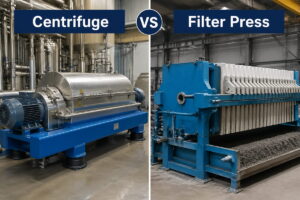
Centrifuga vs. filtropressa: Confronto dettagliato
Prova di performance: Per i numeri
Permettetemi di mostrarvi le prestazioni effettive di queste macchine nelle applicazioni reali:
Secchezza della torta (la grande)
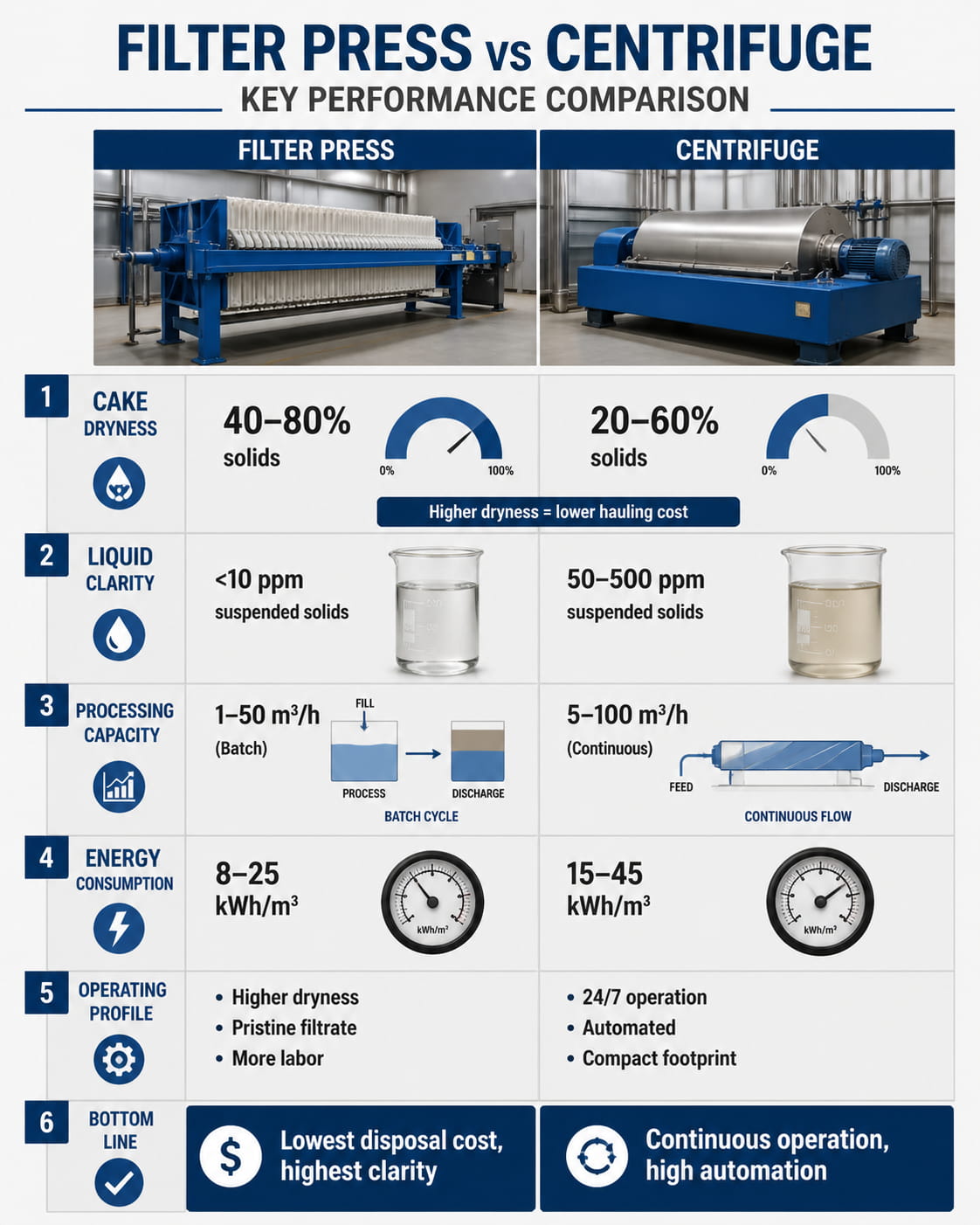
Filtro pressa: 40-80% contenuto di solidi
Centrifuga: 20-60% contenuto di solidi
Traduzione? Una filtropressa può produrre panetti così secchi da sbriciolarsi in mano. Torte da centrifuga? Spesso sono più simili a un dentifricio denso.
Perché è importante?
Supponiamo che stiate smaltendo 100 tonnellate di solidi secchi al mese. Con una filtropressa che raggiunge un grado di essiccazione di 60%, trasportate 167 tonnellate in totale. Una centrifuga a 30% di secco? Trasportate 333 tonnellate.
Questo significa il DOPPIO dei costi di trasporto.
Chiarezza dei liquidi
Filtro pressa: Filtrato cristallino (spesso <10 ppm di solidi sospesi)
Centrifuga: Buona limpidezza (50-500 ppm di solidi sospesi)
I tessuti filtranti agiscono come barriere assolute. Se una particella è più grande della dimensione dei pori, non passa. Punto.
Le centrifughe si basano sulle differenze di densità. Particelle fini o con densità simile a quella del liquido? Potrebbero passare.
Capacità di elaborazione
Filtro pressa: 1-50 m³/ora (lotto limitato)
Centrifuga: 5-100 m³/ora (continuo)
Ma il punto è questo:
I numeri del rendimento grezzo non raccontano l'intera storia. Una centrifuga funziona 24 ore su 24, 7 giorni su 7. Una filtropressa ha bisogno di tempi di inattività tra un lotto e l'altro per lo scarico della torta e la pulizia del tessuto.
Il controllo della realtà dei costi
Ho analizzato decine di installazioni. Ecco come appaiono i numeri:
Investimento iniziale
Sistema piccolo (10 m³/h)
- Filtro pressa: $50.000-150.000
- Centrifuge: $150,000-300,000
Sistema di grandi dimensioni (oltre 50 m³/ora)
- Filtro pressa: $200.000-500.000
- Centrifuge: $400,000-1,000,000
Ma aspettate. C'è dell'altro in questa storia...
Costi operativi (la verità nascosta)
Qui le cose si fanno interessanti.
Consumo di energia
- Filtro pressa: 8-25 kWh/m³
- Centrifuga: 15-45 kWh/m³
L'enorme motore di una centrifuga funziona continuamente. Questo si aggiunge rapidamente.
Requisiti di lavoro
- Filtro pressa: 2-4 operatori per turno (scarico manuale)
- Centrifuga: 1 operatore per più unità
Materiali di consumo
- Filtro pressa: Panni nuovi ogni 500-2.000 cicli
- Centrifuga: Polimero aggiunta spesso richiesta ($$$)
Suggerimento: molte operazioni necessitano di polimeri (flocculanti) per far funzionare efficacemente le centrifughe. Questo può aggiungere $50-200 per tonnellata di solidi secchi trattati.
Applicazioni del mondo reale
Ho visto entrambe le tecnologie avere successo e fallire in modo spettacolare. Ecco quando ciascuna ha senso:
Scegliere una filtropressa quando:
1. La secchezza della torta è il re
Le operazioni minerarie amano le filtropresse. Perché? Spedire il concentrato di rame a 10% di umidità invece che a 25% consente di risparmiare enormi costi di trasporto.
2. È necessario un filtrato incontaminato
Gli impianti chimici spesso richiedono una limpidezza del filtrato che solo una filtropressa è in grado di fornire. Niente multe. Nessuna contaminazione.
3. I volumi sono gestibili
Lavorare 20 m³/ora in turni di 8 ore? Un filtropressa è in grado di gestire tutto questo in modo eccellente senza sudare.
4. Avete manodopera disponibile
Avete una squadra che ha bisogno di lavoro? Il funzionamento della filtropressa offre un'occupazione stabile.
Scegliere una centrifuga quando:
1. Siete in funzione 24 ore su 24, 7 giorni su 7
Gli impianti di acque reflue municipali non possono fermarsi. Una centrifuga si adatta perfettamente al loro flusso continuo.
2. L'automazione è obbligatoria
Le piattaforme petrolifere offshore hanno bisogno di apparecchiature che funzionino da sole. Le centrifughe lo fanno.
3. Lo spazio è limitato
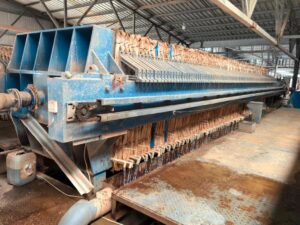
Una centrifuga che lavora 50 m³/ora sta in un container. Un filtropressa equivalente? Pensate a un magazzino.
4. Le caratteristiche del materiale lo favoriscono
I fanghi oleosi, i fanghi di perforazione e i solidi biologici fini spesso si separano meglio in una centrifuga.
La realtà della manutenzione
Nessuno ne parla abbastanza. Ma la manutenzione può fare o distruggere il vostro ROI.
Manutenzione della filtropressa
Il bene:
- Sistemi meccanici semplici
- La maggior parte delle riparazioni può essere effettuata con strumenti di base
- Ricambi prontamente disponibili
Il male:
- La sostituzione del panno è disordinata e richiede tempo
- I meccanismi di spostamento delle piastre si usurano
- Pulizia manuale tra i lotti
Manutenzione annuale tipica: 3-5% del costo del capitale
Manutenzione della centrifuga
Il bene:
- Design autopulente
- Il funzionamento automatico riduce l'usura
- Intervalli più lunghi tra i principali interventi di manutenzione
Il male:
- Richiede tecnici specializzati
- Cuscinetti ad alta velocità = sostituzioni costose
- I costi di ricostruzione delle pergamene possono raggiungere $50.000+.
Manutenzione annuale tipica: 5-8% del costo del capitale
Considerazioni sull'ambiente e sulla sicurezza
Parliamo di ciò che accade effettivamente nel vostro impianto:
Filtro pressa:
- Scarico aperto = potenziale fuoriuscita
- Movimentazione manuale dei panetti filtranti
- Il lavaggio dei panni crea acque reflue
- Minore consumo di energia = minore impronta di carbonio
Centrifuga:
- Funzionamento chiuso
- Nessuna manipolazione manuale dei dolci
- Consumo energetico più elevato
- Uso continuo del polimero (se necessario)
Il risultato finale? Le centrifughe sono più pulite ma consumano molta energia. Le filtropresse risparmiano energia, ma richiedono più manutenzione.
Infografica su centrifuga e filtropressa
Strategie di selezione avanzate
Ecco come i professionisti prendono le decisioni:
Eseguire i numeri (correttamente)
Non limitatevi a confrontare i prezzi di acquisto. Calcolate:
- Costo totale di proprietà a 10 anni
- Costo per tonnellata secca lavorata
- Differenze di costo di smaltimento
- Valore dell'acqua recuperata
Test del materiale effettivo
I test di laboratorio mentono. I test pilota dicono la verità.
Noleggiate l'attrezzatura pilota. Eseguite il VOSTRO liquame. Misurare:
- Essiccazione effettiva del panetto raggiunta
- Requisiti dei polimeri
- Tempi di ciclo (filtropressa)
- Tassi di usura (centrifuga)
Considerare approcci ibridi
Alcune piante li utilizzano entrambi. Esempio:
- Centrifuga per la disidratazione primaria (riduzione del volume di massa)
- Filtro pressa per la lucidatura finale (massima secchezza)
In questo modo si sfrutta il funzionamento continuo delle centrifughe con la superiore disidratazione delle filtropresse.
Prendere la decisione finale
Dopo aver analizzato centinaia di installazioni, ecco la mia struttura:
Scegliere la filtropressa se:
- Costi di smaltimento > $50/tonnellata
- Solidi del panello richiesti > 35%
- L'elaborazione in lotti si adatta alle vostre operazioni
- La qualità del filtrato è importante
- Costo del lavoro < $25/ora
- Il budget per il capitale è limitato
Scegliere la centrifuga se:
- Esecuzione di operazioni continue
- Esistono vincoli di spazio
- Costo del lavoro > $40/ora
- Movimentazione > 30 m³/ora
- Il materiale presenta particelle uniformi e fini
- L'automazione è obbligatoria
Il futuro del drenaggio
La tecnologia non sta ferma. Ecco cosa sta per arrivare:
Filtropresse intelligenti:
- Monitoraggio della pressione abilitato dall'IoT
- Lavaggio automatico dei panni
- Avvisi di manutenzione preventiva
- Funzionalità di funzionamento a distanza
Centrifughe di nuova generazione:
- Ottimizzazione della velocità variabile
- Sistemi di controllo basati sull'intelligenza artificiale
- Componenti di usura in ceramica
- Sistemi di recupero energetico
Ma il punto è che la fisica fondamentale non cambia. La pressione spreme meglio. La velocità processa più velocemente.
Il vostro piano d'azione
- Definire l'obiettivo principale: Massima secchezza o funzionamento continuo?
- Calcolare i costi reali: Include manodopera, energia, smaltimento e manutenzione.
- Test con il vostro materiale: Non fidatevi mai dei dati generici sulle prestazioni
- Considerate i vostri vincoli: Spazio, disponibilità di manodopera, budget di capitale
- Pianificare il futuro: Dove sarà la vostra attività tra 5 anni?
Il vero risultato finale
Il centrifuga vs filtropressa Non si tratta di decidere quale tecnologia sia “migliore”. Si tratta di scegliere quella che si adatta alle vostre specifiche operazioni.
Ho visto impianti risparmiare milioni scegliendo correttamente. Ho anche visto operazioni paralizzate dalla scelta sbagliata.
Se lo fate bene, ottimizzerete l'intero processo a valle. Se lo sbagliate, vi ritroverete a combattere ogni giorno contro questa decisione.
Prendetevi il tempo necessario. Eseguite i test. Fate una scelta intelligente.
Perché alla fine il miglior sistema di disidratazione è quello che funziona effettivamente per la VOSTRA applicazione, non quello che ha funzionato per qualcun altro.



 Italian
  English
  German
  Spanish
  French
  Russian
  Turkish
  Dutch
Dutch  Polish