
Principaux enseignements
- 90% of filter press issues stem from just 5 root causes: cloth blinding, pump problems, poor chemical conditioning, plate misalignment, and inadequate maintenance.
- Start troubleshooting by checking pressure, inspecting filter cloths, and verifying plate alignment – these solve most problems. Follow a systematic approach: identify symptoms, list potential causes, test one variable at a time, and document solutions.
- Prevention beats repair – a solid maintenance schedule can prevent 80% of breakdowns before they happen.
Ever stood in front of a malfunctioning filter press wondering where to even start?
I get it. Filter press troubleshooting can feel overwhelming when you’re dealing with leaks, poor cake formation, or mysteriously cloudy filtrate.
Voici ce qu'il en est :
Most filter press problems follow predictable patterns. And once you know what to look for, fixing them becomes WAY easier.
Dans ce guide, en tant que professionnel fabricant de filtres-presses, I’ll walk you through the exact troubleshooting process I’ve seen work in hundreds of facilities. No fluff. Just actionable solutions that actually work.
Plongeons dans le vif du sujet.
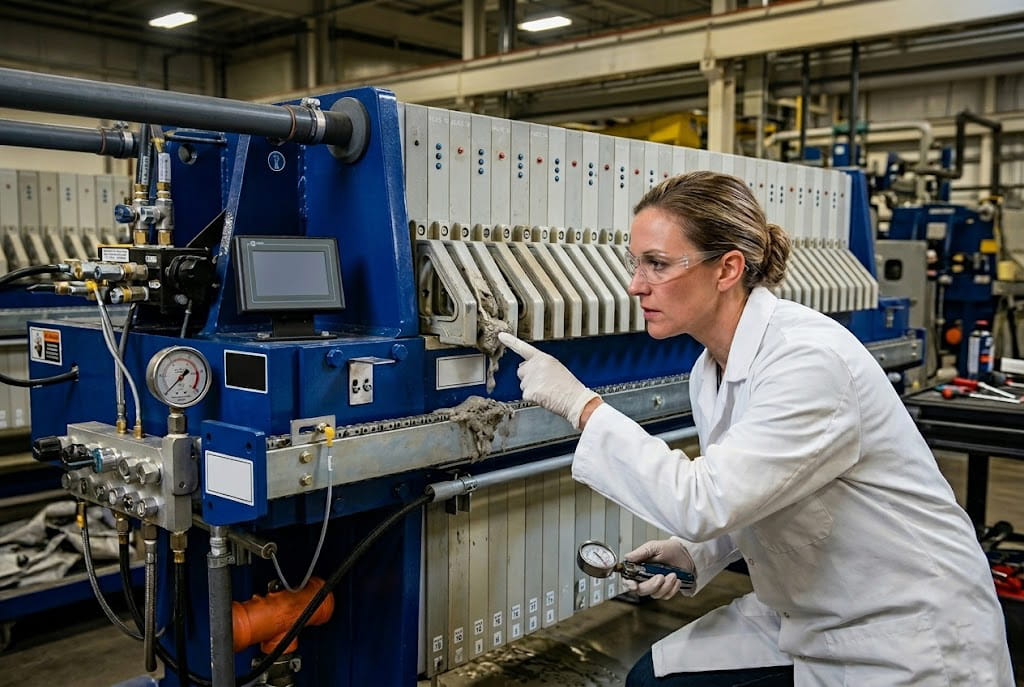
Why Your Filter Press Keeps Breaking Down (And What to Do About It)
Voici une chose que la plupart des gens ne réalisent pas :
90% of filter press issues stem from just 5 root causes.
Je parle de.. :
- Cloth blinding and wear
- Pump and pressure problems
- Poor chemical conditioning
- Plate misalignment
- Inadequate maintenance
The good news? Each of these has clear warning signs. And even clearer fixes.
Let me break down the most common problems you’ll face (and exactly how to solve them).
Filter Press Troubleshooting: 5 Common Problems
Problem #1: Your Filter Press Won’t Build Pressure
This is THE most frustrating issue operators face.
You start a cycle. The pump runs. But pressure stays stubbornly low.
Cela vous rappelle quelque chose ?
Here’s what’s usually happening:
Your feed pump can’t deliver enough pressure due to wear, blockages, or air in the system.
(In fact, trapped air causes 30% of pressure problems. Crazy, right?)
The Fix:
First, check your pump. Is it making unusual noises? Running hot? These are dead giveaways of internal wear.
Next, bleed your system. Open those vent valves and let trapped air escape.
Still having issues?
Time to inspect your slurry. Thick, viscous slurry needs more pressure to filter properly. Try diluting it slightly and see what happens.
Pro Tip: Install a pressure gauge right at your pump discharge. This lets you spot pressure drops instantly.
Problem #2: Leaks Between Filter Plates
Nothing ruins your day faster than slurry spraying everywhere.
Mais voilà :
Plate leaks are almost always preventable.
Common Causes:
- Worn gaskets (the #1 culprit)
- Plaques désalignées
- Damaged cloth edges
- Excessive feed pressure
How to Fix Leaking Plates:
Start with the obvious – inspect your gaskets. Even tiny nicks or compression set can cause major leaks.
Found damaged gaskets? Replace them immediately.
(Don’t try to “make do” with bad gaskets. Trust me, it’s not worth the mess.)
Next, check plate alignment. Use a straight edge to ensure plates sit perfectly parallel. Even 1/8″ misalignment can cause leaks.
Finally, examine your filter cloths. Torn edges or improper installation practically guarantee leaks.
Problem #3: Poor Filtrate Quality (Cloudy or Contaminated)
Getting cloudy filtrate when you need crystal-clear liquid?
This problem drives operators crazy. And for good reason – it can shut down your entire downstream process.
Here’s what causes poor filtrate:
- Wrong filter cloth selection
- Cloth damage or holes
- Inadequate precoating
- Breakthrough of fine particles
The Solution:
First, grab a sample of your filtrate and check it against your specs. This gives you a baseline.
Now inspect your filter cloths. Even pinholes can let particles through.
Found damage? Replace those cloths ASAP.
But if your cloths look good, the issue is probably your cloth selection.
See, different applications need different micron ratings. Using 25-micron cloth for 5-micron particles? You’ll get cloudy filtrate every time.
Quick Test: Try a finer filter cloth on one chamber. If filtrate quality improves, you’ve found your problem.
Problem #4: Filter Cloth Blinding
Cloth blinding is sneaky.
It starts slowly. Cycle times creep up. Pressure builds higher. Then suddenly – your press barely filters at all.
Why Cloths Blind:
- Fine particles clogging pores
- Polymer overdosing (creates that slimy coating)
- Oil and grease contamination
- Inadequate cleaning
How to Fix Blinded Cloths:
The fastest solution? Acid washing.
Mix up a 4-5% hydrochloric acid solution. Run it through your press (or soak plates overnight).
This dissolves mineral deposits and breaks down polymer buildup.
For oily contamination, try hot water with degreasing detergent first.
Still not working?
Your cloths might be beyond saving. But before replacing them, try this:
Install an air permeability test. This shows exactly how clogged your cloths are – taking the guesswork out of replacement timing.
Problem #5: Cake Sticking to Filter Cloths
Nothing slows down operations like manually scraping cake off every plate.
(I’ve seen crews spend HOURS on this. Not fun.)
Common Causes:
- Excessive moisture in cake
- Wrong cloth type
- Poor cake release properties
- Over-compression
The Fix:
Start by checking your cake moisture. Grab a sample and test it.
Too wet? Extend your air-blow time. This alone can solve 50% of sticking issues.
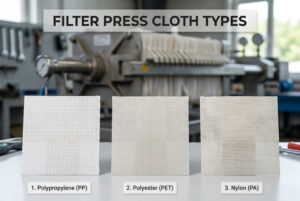
Next, consider your filter cloth. Some materials (like polypropylene) naturally release cake better than others.
For tough applications, try calendared or coated cloths. They’re specifically designed for easy release.
Pro Tip: A light precoat of diatomaceous earth can work wonders for sticky materials.
Advanced Troubleshooting Techniques
Now let’s talk about the issues that stump even experienced operators.
Formation inégale des gâteaux
Ever open your press to find thick cake on some plates and paper-thin cake on others?
This kills your efficiency.
The Root Cause: Uneven slurry distribution.
Maybe your feed ports are partially clogged. Or your header pressure varies across the press.
Fix This By:
- Cleaning ALL feed ports thoroughly
- Installing pressure gauges at multiple points
- Checking for internal plate blockages
- Ensuring consistent slurry mixing
Hydraulic System Problems
Modern filter presses rely on hydraulics. When they fail, everything stops.
Watch for These Warning Signs:
- Slow or jerky plate movement
- Oil leaks around cylinders
- Overheating hydraulic fluid
- Unusual pump noises
Quick Fixes:
- Check oil level and top up if needed
- Replace worn seals immediately
- Clean or replace clogged filters
- Verify proper oil viscosity
(Remember: hydraulic issues get expensive fast. Don’t ignore early warning signs.)
Premature Plate Wear
Replacing plates isn’t cheap. So when they wear out early, it hurts.
What Causes Premature Wear:
- Abrasive slurries
- Chemical attack
- Excessive pressure
- Poor foundation support
Extend Plate Life By:
- Using proper plate materials for your application
- Maintaining correct operating pressure
- Ensuring level, stable foundation
- Regular inspection and rotation
Your Filter Press Maintenance Schedule
Want to prevent 80% of these problems?
Follow this maintenance schedule:
Daily:
- Visual inspection for leaks
- Check hydraulic oil level
- Monitor cycle times
Weekly:
- Clean feed ports
- Inspect filter cloths
- Test filtrate quality
Monthly:
- Lubricate moving parts
- Check plate alignment
- Clean hydraulic filters
Quarterly:
- Deep clean filter cloths
- Inspect all gaskets and seals
- Calibrate pressure gauges
Annually:
- Replace worn cloths
- Overhaul hydraulic system
- Professional inspection
The Bottom Line on Filter Press Troubleshooting
Here’s what I want you to remember:
Most filter press problems aren’t mysterious. They follow patterns.
Learn those patterns, and you’ll fix issues 10x faster.
Start with the basics – pressure, cloths, and alignment. These solve 90% of problems.
For everything else?
Use the systematic approach I’ve outlined above. Check one variable at a time. Document what works.
And remember:
Prevention beats repair every single time. A solid maintenance program pays for itself through avoided downtime.
Got a specific filter press issue I didn’t cover? The troubleshooting principles remain the same:
- Identify symptoms precisely
- List potential causes
- Test systematically
- Document your solution
Master this process, and you’ll handle any challenge your filter press throws at you.
Because at the end of the day, effective filter press troubleshooting isn’t about knowing every possible problem – it’s about thinking systematically and taking action based on what you observe.





 French
  English
  German
  Spanish
  Italian
  Russian
  Turkish
  Dutch
Dutch  Polish