
Choosing between a filter press and a centrifuge for your dewatering needs?
Here’s the deal: Both technologies can separate solids from liquids. But they work in completely different ways. And picking the wrong one can cost you thousands in wasted operating expenses.
I’ve analyzed dozens of facilities using both filter press vs centrifuge systems. And in this guide, as a professional fabricante de filtros prensa, I’ll show you exactly which technology makes sense for your specific situation.
Let me break it down for you.
Resumen rápido
- Filter presses deliver maximum cake dryness (25-45% solids) with lower energy costs but require batch processing and more manual labor.
- Centrifuges offer continuous 24/7 operation with higher throughput and automation but consume 2-3x more energy and produce wetter cakes.
- Choose filter presses for driest cake and energy efficiency; pick centrifuges for continuous operation, oily materials, and minimal labor requirements.
- Calculate total 5-year ownership costs including hidden expenses like filter cloth replacement ($5,000-20,000/year) or centrifuge wear parts ($20,000-50,000 every 2-5 years).
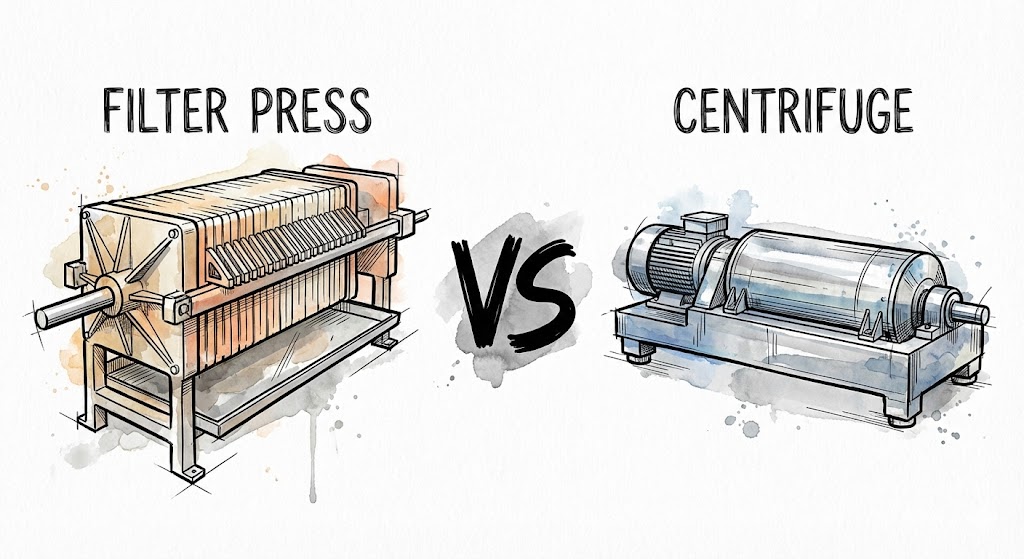
Real Difference Between Filter Press and Centrifuge
Lo primero es lo primero:
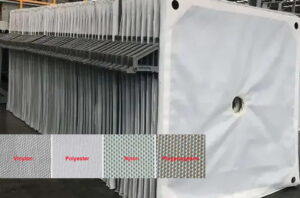
A filter press uses mechanical pressure to squeeze liquid through filter media. Think of it like a giant industrial coffee filter that applies tons of force.
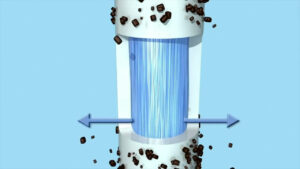
A centrifuge? It spins your slurry at crazy-high speeds (we’re talking 2,000-6,000 G-forces) to separate materials by density.
Simple enough, right?
Pero aquí es donde se pone interesante...
Filter Press: The Pressure Champion
Filter presses work in batches. You pump slurry into chambers, apply pressure (usually 6-15 bar), and wait.
The process looks like this:
- Fill the chambers with slurry
- Apply pressure to force liquid through filter cloths
- Build up a solid “cake” inside
- Open the press and remove the cake
- Repeat
¿El resultado? Super dry cakes with 25-45% solids content. Sometimes even higher.
Centrifuge: The Speed Demon
Centrifuges take a totally different approach.
They continuously feed material into a spinning bowl. The centrifugal force pushes heavier solids to the outer wall while clarified liquid flows out the other end.
No stopping. No starting. Just continuous separation 24/7.
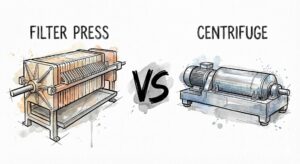
Filter Press vs Centrifuge Comparison
Filter Press vs Centrifuge Performance Compare
Let me show you how these technologies stack up in real-world applications:
Throughput Capacity:
- Centrifuge: 5-100 m³/hour (continuous)
- Filter Press: 1-50 m³/hour (batch)
Solids Recovery Rate:
- Centrifuge: 90-98%
- Filter Press: 98-99.8%
Final Cake Dryness:
- Centrifuge: 20-80% solids
- Filter Press: 25-45% solids (consistently higher)
Energy Consumption:
- Centrifuge: 15-45 kWh/m³
- Filter Press: 8-25 kWh/m³
The bottom line? Filter presses produce drier cakes with less energy. But centrifuges process way more volume without stopping.
Recommended Uses
When to Choose a Filter Press
I recommend filter presses when:
You need the driest possible cake. If disposal costs are killing your budget, those extra percentage points of dryness matter. A lot.
For example, one wastewater plant I worked with cut their hauling costs by 40% after switching to a filter press. Why? Their cake went from 18% to 35% solids.
Batch processing works for you. Some operations naturally work in batches. If you’re already set up that way, a filter press fits right in.
Energy costs are a major concern. Filter presses use roughly half the energy of centrifuges. In 2026, with energy prices where they are, that’s huge.
You’re handling difficult materials. Got sticky sludge? High clay content? Filter presses power through materials that would make centrifuges struggle.
When Centrifuges Make More Sense
But centrifuges shine in other situations:
You need continuous operation. Can’t stop your process for batch discharge? Centrifuges run 24/7 without breaking a sweat.
You’re processing oily sludge. Fats, oils, and greases (FOG) absolutely destroy filter cloths. But centrifuges? They eat that stuff for breakfast.
Space is tight. A centrifuge handling 100 m³/hour takes up way less room than an equivalent filter press setup.
Labor costs are high. One operator can manage multiple centrifuges. Filter presses? They need 2-4 people for cake removal and cleaning.
Filter Press vs Centrifuge: Hidden Costs Compare
Here’s what most vendors won’t tell you:
Filter Press Hidden Costs:
- Filter cloth replacement: $5,000-20,000 per year
- Manual labor: 2-4 operators per shift
- Downtime: 30-60 minutes per cycle for cake removal
- Ancillary equipment: Pumps, conveyors, wash systems
Centrifuge Hidden Costs:
- Power consumption: 2-3x higher than filter presses
- Wear parts: Scroll repair every 2-5 years ($20,000-50,000)
- Noise abatement: Often required for urban installations
- Skilled maintenance: Specialized technicians needed
Pro tip: Calculate your total cost of ownership over 5 years, not just the purchase price. I’ve seen facilities save $200,000+ annually by choosing the right technology upfront.
Filter Press vs Centrifuge: Application Differences
Let me share what actually works in different industries:
Tratamiento de aguas residuales municipales
Most municipal plants I’ve worked with prefer centrifuges. Why?
- Continuous operation matches their 24/7 flow
- Automated systems reduce labor costs
- Smaller footprint in crowded facilities
One plant in Ohio switched from belt presses to centrifuges in 2024. Result? They cut their operator hours by 60% while processing 20% more biosolids.
Aguas residuales industriales
This one’s split 50/50.
Chemical plants often choose filter presses for maximum cake dryness. But refineries? They go centrifuge every time because of the oil content.
Mining and Aggregates
Filter presses dominate here. Mining operations want that bone-dry cake for easier handling and lower transport costs.
Alimentación y bebidas
Centrifuges win in food processing. They’re gentler on the product and meet strict hygiene requirements more easily.
Filter Press vs Centrifuge Comparison Table
| Categoría | Filtro prensa | Centrifuge |
|---|---|---|
| Operation mode | Batch — fill, press, cake removal, repeat | Continuous — continuous feed and discharge |
| Primary separation method | Mechanical pressure forcing liquid through filter cloth/media | High G‑force (2,000–6,000×g) separation by density in a spinning bowl |
| Typical throughput | 1–50 m³/hour (batch) | 5–100 m³/hour (continuous) |
| Solids recovery rate | 98–99.8% | 90–98% |
| Final cake dryness (solids content) | Typically 25–45% (consistently higher; sometimes above 45%) | 20–80% (wide, variable) |
| Consumo de energía | 8–25 kWh/m³ (lower) | 15–45 kWh/m³ (higher) |
Tomar la decisión final
So which technology should you choose?
Start with these questions:
- What’s your primary goal? Driest cake = filter press. Highest throughput = centrifuge.
- What’s your budget situation? Low capital budget = filter press. Low operating budget = depends on your specific case.
- What are you dewatering? Oily materials = centrifuge. High solids concentration = filter press.
- How much automation do you need? Full automation = centrifuge. Some manual operation OK = filter press.
Installation and Startup Considerations
Don’t forget about installation requirements:
Filter Press Installation:
- Large floor space (20-100 m²)
- Overhead clearance for plate movement
- Heavy-duty flooring for equipment weight
- Drainage systems for washwater
Centrifuge Installation:
- Smaller footprint (10-30 m²)
- Vibration isolation systems
- Noise enclosures
- Higher electrical service requirements
Future-Proofing Your Investment
Looking ahead to the rest of 2026 and beyond, consider:
Technology trends: Centrifuges are getting more efficient with variable speed drives and AI-powered optimization. Filter presses are adding automated cloth washing and cake discharge systems.
Regulatory changes: Stricter disposal regulations favor filter presses that produce drier cakes. But energy efficiency mandates might push some toward newer centrifuge models.
Market dynamics: Rising landfill costs make cake dryness increasingly important. Rising labor costs favor automated centrifuge systems.
The Verdict
There’s no universal winner in the filter press vs centrifuge debate.
Filter presses deliver when you need maximum dryness and have batch-friendly operations. They’re simple, reliable, and energy-efficient.
Centrifuges excel at continuous processing, automation, and handling difficult materials like oily sludges. They’re fast, compact, and require minimal labor.
The key? Match the technology to your specific needs, not what worked at another facility.
Calculate your true costs. Consider your constraints. And don’t forget about those hidden expenses I mentioned.
Get this decision right, and you’ll save hundreds of thousands over your equipment’s lifetime. Get it wrong? Well, let’s just say I’ve seen plenty of expensive equipment gathering dust.
Bottom line: Both technologies work great when properly applied. The trick is knowing which one fits your unique situation.


 Spanish
  English
  German
  French
  Italian
  Russian
  Turkish
  Dutch
Dutch  Polish