
Filter press cloth cleaning: Three proven methods work: high-pressure washing (800-1200 PSI) for routine cleaning, chemical recirculation with 5-10% HCl for deep cleaning, and acid dipping as a last resort.
If you’ve ever dealt with a filter press that’s running slow, producing wet cakes, or requiring sky-high filtration pressures, you know the struggle is real.
Voici ce qu'il en est :
Filter press cloth cleaning is the #1 maintenance task that separates high-performing operations from those constantly fighting equipment issues. Yet most facilities either skip it entirely or do it wrong.
Dans ce guide, en tant que professionnel fabricant de filtres-presses, I’m about to show you exactly how to clean filter press cloths the RIGHT way. Plus, I’ll reveal the cleaning methods that actually work (and which ones waste your time).
Plongeons dans le vif du sujet.
Why Filter Press Cloth Cleaning Matters More Than You Think
Imaginez un peu :
You’re running your filter press and notice the cycles are taking forever. The pressure gauge is climbing higher than your monthly utility bill. And the cakes? They’re coming out wetter than a sponge.
Sound familiar?
Here’s what’s actually happening:
During normal operation, microscopic particles penetrate your filter cloth and get lodged deep in the weave. Think of it like a coffee filter that’s been used one too many times – eventually, it just stops working efficiently.
Le résultat ? Regular cloth cleaning can:
- Cut filtration cycle times by up to 50%
- Reduce operating pressures
- Produce drier cakes
- Extend cloth life by 2-3x
(And that’s not even counting the money you’ll save on replacement cloths and downtime.)
When Should You Clean Your Filter Press Cloths?
Most operators wait until their press is basically begging for mercy.
Big mistake.
Here are the telltale signs your cloths need cleaning NOW:
- Initial pressure spikes above normal operating range
- Filtration cycles stretching longer than usual
- Wet filter cakes despite proper operation
- Cloudy filtrate coming from the press
- Visible buildup on cloth surfaces
Conseil de pro : Don’t wait for all these symptoms. If you see even ONE, it’s cleaning time.
Filter Press Cloth Cleaning: 3 Most Effective Cleaning Methods
Soyons clairs :
Not all cleaning methods are created equal. I’ve tested dozens of approaches over the years, and these three consistently deliver results.
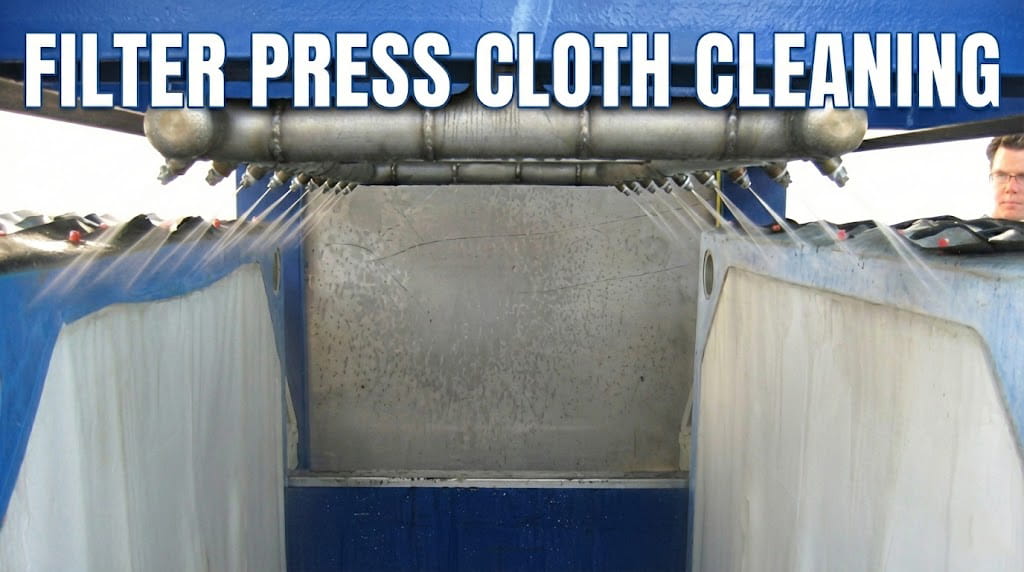
Method #1: High-Pressure Washing (The Quick Fix)
This is your go-to for routine maintenance.
Here’s exactly how to do it:
Étape 1 : Get a cold-water pressure washer (800-1200 PSI is the sweet spot)
Étape 2 : Use a fan-shaped spray pattern – NOT a pinpoint jet
Étape 3 : Hold the nozzle 15-20 cm (6-8 inches) from the cloth
Étape 4 : Work systematically from top to bottom
Step 5: Pay extra attention to the sealing areas and stay bosses
(Fun fact: Going above 1000 PSI can actually damage your cloths. More pressure ≠ better cleaning.)
Le plus beau ?
You can do this with the cloths still mounted on the plates. No disassembly required.
Method #2: Chemical Recirculation (The Deep Clean)
When pressure washing isn’t cutting it, it’s time to bring out the big guns.
Chemical cleaning dissolves those stubborn particles that are lodged deep in the cloth fibers.
Here’s my proven setup:
Equipment needed:
- Storage tank (1.5x your press capacity)
- Acid-resistant pump (20-30 PSI max)
- PVC piping or chemical-resistant hoses
- Appropriate PPE (this is NOT optional)
The process:
- Clean off visible cake material with spatulas
- Close the filter press
- Disconnect the center feed from your sludge pump
- Connect your acid pump to the center feed
- Hook up return lines to your recirculation tank
- Circulate cleaning solution for 1-2 hours
- Perform air blowdown (15 PSI max)
- Reconnect normal operation lines
What cleaning solution should you use?
For most applications, I recommend:
- 5-10% hydrochloric acid (HCl) for polypropylene cloths
- 3-5% HCl for polyamide cloths
- Add a non-ionic detergent for extra cleaning power
Mais voilà :
Your specific solution depends on what you’re filtering. Metallic hydroxides? Acid works great. Organic materials? You might need caustic instead.
Method #3: The Acid Dip (Last Resort)
Sometimes you need to pull out the nuclear option.
Remove the cloths completely and give them an acid bath:
- Mix a 3-5% acid solution in a large tank
- Submerge cloths completely (they’ll float, so weigh them down)
- Soak overnight
- Rinse thoroughly with clean water
- Air dry before reinstalling
Fair warning: This method is labor-intensive and means downtime. But for severely plugged cloths, it might be your only option besides replacement.
The Weekly Maintenance Routine That Prevents Major Problems
Want to know the secret to avoiding emergency cleanings?
Consistent weekly maintenance.
(I know, not exactly revolutionary. But you’d be amazed how many facilities skip this.)
Every week, at minimum:
- Rinse all cloth surfaces with clean water
- Focus on perimeter sealing areas
- Clear any buildup from stay bosses
- Inspect for tears or damage
- Check filtrate clarity
This 30-minute routine can prevent HOURS of deep cleaning later.
Advanced Tips for Maximum Filter Press Cloth Life
After working with hundreds of filter press operations, I’ve picked up some tricks that make a massive difference:
Temperature matters: Never use cleaning solutions above 40-50°C. Heat can damage synthetic fibers.
Timing is everything: Clean cloths immediately if you’re shutting down for more than 3 days. Dried cake is 10x harder to remove.
Don’t forget the backer cloths: These often get ignored but affect performance just as much.
Match your cleaning to your material: What works for metal hydroxides won’t necessarily work for organic sludges.
Document everything: Track cleaning frequency, methods used, and results. You’ll start seeing patterns that help optimize your schedule.
Common Mistakes That Ruin Filter Press Cloths
I see these errors constantly:
Mistake #1: Using excessive pressure
Anything over 1500 PSI risks tearing the fabric or forcing the weave apart.
Mistake #2: Wrong cleaning chemicals
Using the wrong pH can destroy certain cloth materials. Always check compatibility.
Mistake #3: Ignoring small holes
A tiny tear becomes a massive problem FAST. Patch or replace immediately.
Mistake #4: Cleaning only when forced
Reactive maintenance costs 3-4x more than preventive maintenance.
Mistake #5: Improper drying
Never use direct heat or industrial dryers. Air drying prevents shrinkage.
When to Replace Instead of Clean
Sometimes, cleaning isn’t enough.
Replace your cloths when you see:
- Multiple patches or repairs
- Thinning fabric
- Persistent flow issues despite cleaning
- Visible fiber degradation
- Holes larger than 2 inches
The cost of new cloths pales in comparison to the efficiency losses from worn-out fabric.
Setting Up Your Cleaning System for Success
If you’re serious about maintenance (and you should be), invest in a proper cleaning setup:
Option 1: Manual system
- Pressure washer
- Cleaning tanks
- Basic pump setup
- Budget: $2,000-5,000
Option 2: Semi-automated
- Mounted spray bars
- Recirculation system
- Timer controls
- Budget: $10,000-20,000
Option 3: Fully automated
- CIP (Clean-In-Place) system
- Programmable controls
- Multiple cleaning zones
- Budget: $25,000+
The ROI on these systems? Usually under 6 months when you factor in reduced labor and improved throughput.
Safety First (Seriously)
Working with cleaning chemicals is no joke.
Toujours :
- Wear appropriate PPE
- Ensure proper ventilation
- Have eyewash stations nearby
- Follow lockout/tagout procedures
- Keep SDS sheets handy
One accident can shut down your operation for weeks. Don’t risk it.
The Bottom Line on Filter Press Cloth Cleaning
Voici ce qu'il en est :
Regular filter press cloth cleaning isn’t just maintenance – it’s the difference between a smoothly running operation and constant firefighting.
Start with weekly rinses. Move to pressure washing when needed. Save chemical cleaning for stubborn buildup. And know when it’s time to replace instead of clean.
Your filter press (and your sanity) will thank you.
Remember: The best cleaning schedule is the one you actually stick to. Start small, be consistent, and scale up as you see results.
Now get out there and show those filter cloths who’s boss.



 French
  English
  German
  Spanish
  Italian
  Russian
  Turkish
  Dutch
Dutch  Polish